
In equity, return is not a coupon: it is the result of a real real estate project. That makes it especially interesting for investors, because it allows them to capture value when the plan goes well. But it also requires understanding something fundamental: the final return depends on execution – and therefore on the developer, the market and control over costs and timelines.
That is why, when a project is liquidated with an especially positive result, it is worth analysing it calmly. Not to turn it into the norm, but to identify which levers explained the outcome and what lessons it offers for assessing future projects. In that sense, the exit of Allonbay Aura is a useful case study.
What the project was and what the result has been
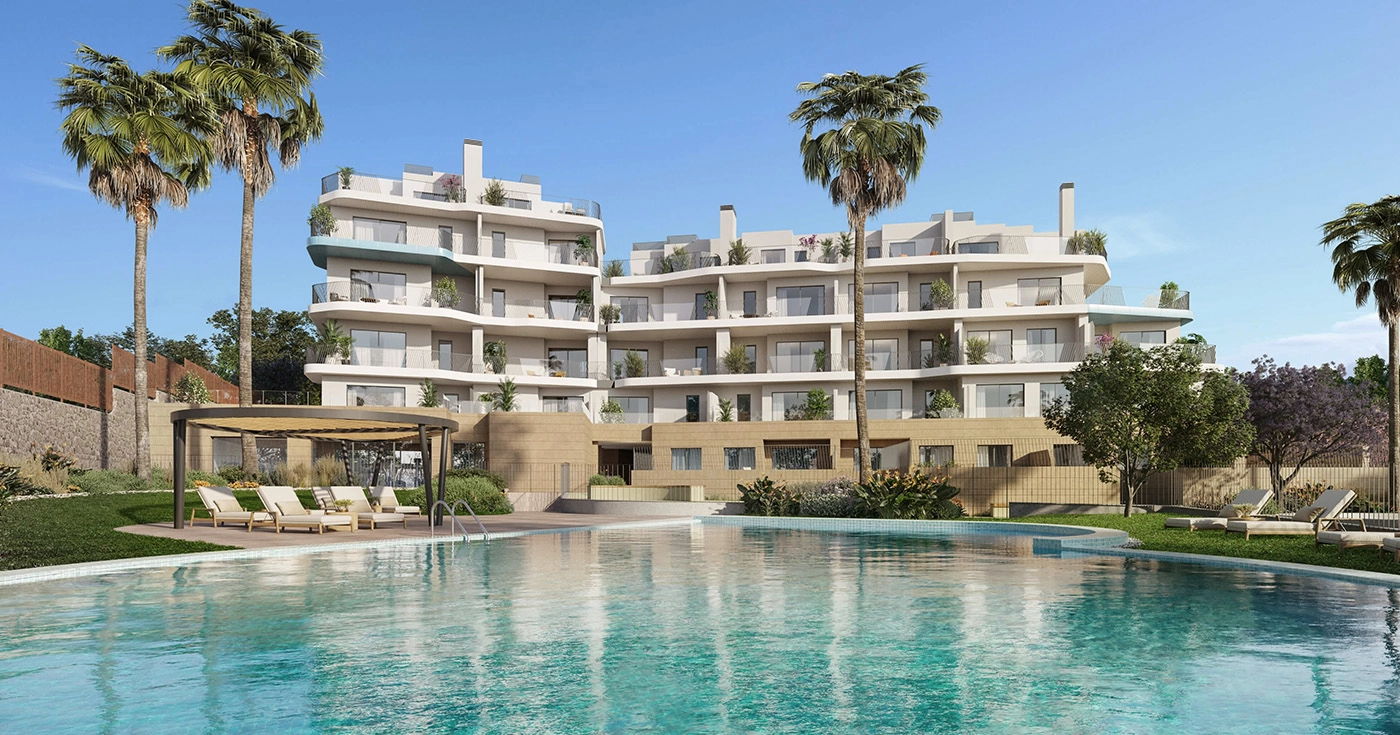
Allonbay Aura was developed in Villajoyosa, Alicante, and consisted of a beachfront new-build residential development: 25 homes with parking spaces and storage rooms, a communal swimming pool and shared areas. In addition, the project included BREEAM environmental certification.
The investment opened on 21 November 2023 and the final liquidation took place on 4 June 2026. The final gross return was 60.1% CoC, and the IRR reached 21.2%, well above the scenario initially estimated: 32.7% and 13.9%.
A good exit does not mean a frictionless path
One of the most useful nuances for understanding equity is that the real timeline is rarely perfect. Even in very solid projects, final adjustments, technical requirements and administrative procedures can extend the last stretch.
In Allonbay Aura, the construction period extended to 22 months instead of 18, partly due to adjustments and requirements associated with BREEAM certification. The phase between completion of works and liquidation also extended to 8 months instead of 4, due to the obtaining of the first occupancy licence (LPO) and the signing of deeds.
This point matters because it explains why, in equity, IRR coexists with timeline risk. In this case, what matters is that other levers – revenues, costs and taxation – offset that delay, and did so comfortably.
Where returns come from when the levers work in your favour
The closing report for the project makes it possible to trace the result. The first lever was commercial. When Urbanitae investors entered the project, the development had already reserved 56% of the homes. As construction progressed, the development gained visibility and the market appreciated, allowing the remaining units to be sold at prices above those initially forecast. In figures, revenues increased from an estimated €17.16 million to an actual €18.50 million, while the average price rose from €6,345/sqm to €6,839/sqm.
The second lever was cost control. The construction cost closed slightly below budget, a decisive factor in protecting the margin in equity.
The third was a less visible but very tangible lever: tax efficiency. The manager analysed and succeeded in applying the reduced 15% corporate income tax rate, reducing the tax burden at final liquidation and transferring that saving to the return. The report also states that the project generated an additional €1 million in pre-tax profit, thanks, among other factors, to the stronger commercial performance.
Equity and the cycle: why 2021-2022 was a stress test
Talking about the strengths of equity also means remembering its nature: the return is not agreed in advance; it depends on the real margin of the project. That is why, when the environment becomes more complex – costs, rates, financing and demand – equity feels the impact.
The market went through a stress test in 2021 and 2022: many transactions outside Urbanitae suffered severe deviations, and some ended with losses. Urbanitae has also gone through that environment, and some projects have had to navigate more demanding scenarios than initially expected. But there is an important nuance: to date, we have not closed any equity projects with losses for investors.
The major variable: a good developer
If there is one cross-cutting lesson in equity, it is this: the developer matters. It matters because of commercial capacity, early traction, cost discipline and the ability to manage the final stretch – permits, certifications, deeds – where months often get stuck. In Allonbay Aura, the report expressly thanks the management team for its effort in optimising resources and achieving the best possible result.
And when the environment is not favourable, another less visible element comes into play: monitoring throughout the life of the project. The work of Asset Management does not create success on its own, but it can be decisive in difficult situations: detecting deviations in time, demanding information, tightening alternatives and preventing an operational problem from becoming a loss for the investor.
Allonbay Aura is not a promise. It is an already completed exit that illustrates how equity behaves when the right product, a responsive market and, above all, good execution come together. And, as always, investing involves risks: analysing closed projects with figures and context is one of the best ways to invest with judgement.