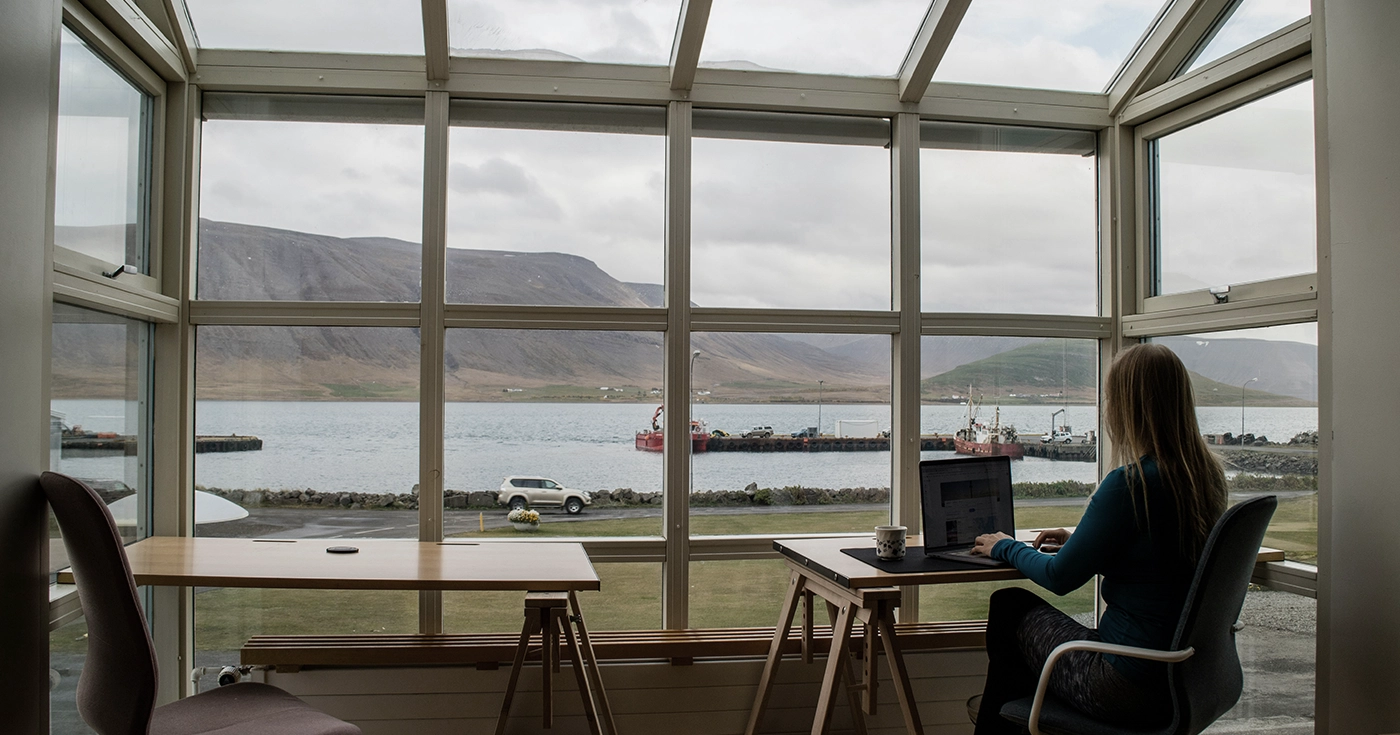

The office market in Spain has undergone a profound transformation in recent years. The pandemic accelerated a shift that was already beginning to emerge: offices are no longer seen as purely functional spaces, but rather as tools for organisation, collaboration and talent attraction.
In the years following COVID-19, many companies reassessed their space needs in light of remote work and new hybrid models. However, this reassessment has not led to a structural decline in the segment, but rather to a reconfiguration of the market: today, the total square metres occupied matter less than quality, location and the asset’s ability to meet new demands.
Less space, but better
One of the major changes in the market has not been a linear contraction in demand, but a qualitative transformation. Many companies have chosen to optimise their space while upgrading its quality: more efficient buildings, better connectivity, enhanced features and a stronger alignment with corporate identity.
This has reinforced market polarisation. In Madrid, availability within the M-30 ring road fell below 3%, and within that area, the supply of Grade A and B+ buildings dropped below 2%, while prime rents reached €43/m²/month in the CBD. In Barcelona, the vacancy rate closed at 9.6%, with prime rents reaching €31.5/m²/month.
The conclusion is clear: the market increasingly penalises average assets and rewards buildings that are well-located, modern, efficient and adaptable. Today, it is not enough to own office space—those offices must remain competitive.
Hybrid work redefines the office, rather than eliminating it
Following the rise of remote work, the market has evolved towards hybrid models in which the office continues to play a key role. The debate is no longer about whether physical presence will disappear, but rather what role the physical workspace plays within organisations. Companies still value offices as spaces for coordination, corporate culture, training and collaboration, and many aim for hybrid models with a significant level of in-person activity.
This has changed the logic of occupancy. Companies are not just looking for space, but for environments that justify physical presence: higher quality, greater flexibility, improved user experience and increased operational efficiency.
Demand recovery and renewed investor interest
This new dynamic is reflected in market activity. In 2025, office take-up returned to solid levels in Spain’s two main markets. According to Cushman & Wakefield, leasing activity exceeded 517,000 m² in Madrid and 317,000 m² in Barcelona, while CBRE reports 486,000 m² and 319,000 m², respectively. In both cases, the message is the same: the market has regained momentum and is operating close to pre-pandemic levels.
Investment has also shown a strong recovery. CBRE estimates office investment in Spain at €2.2 billion in 2025, a 36% year-on-year increase. Including change-of-use transactions and owner-occupier purchases, the figure rises to €2.94 billion. A significant share of this capital has been concentrated in central locations: in Barcelona, 70% of the volume was directed to the CBD and city centre; in Madrid, 84%.
However, investment is not evenly distributed. There remains a clear preference for high-quality assets in prime locations, with strong ESG credentials and the ability to adapt to evolving market requirements.
Increased pressure on obsolete assets and growing interest in repositioning
The new environment has also created opportunities for repositioning strategies. A portion of capital is not only targeting stabilised assets but also transforming less competitive buildings to bring them back to the market in improved conditions or even convert them to alternative uses. CBRE notes that in 2025, change-of-use transactions accounted for a significant share of office investment activity in Spain.
This aligns with an increasingly important concept for investors: in the office sector, value creation no longer depends solely on acquiring assets at the right price, but on understanding which buildings can remain relevant and which will require intervention to avoid obsolescence.
New activity hubs and geographic rebalancing
Although prime assets continue to attract a large share of interest, the market is not moving in a single direction. In Madrid, CBRE highlights that in 2025, peripheral markets accounted for 52% of total leasing activity, surpassing the M-30 area and pointing to a degree of rebalancing.
This does not imply a loss of relevance for central locations, but rather the consolidation of new alternatives in well-connected areas, featuring modern buildings, more efficient layouts and more competitive rents. In practice, two realities coexist: on the one hand, highly constrained CBDs with limited availability; on the other, decentralised markets gaining attractiveness for certain occupiers and corporate strategies.
Outlook: a more demanding and segmented market
Looking ahead, the office market is expected to remain more selective, more segmented and more strategic than before the pandemic. Offices are not disappearing, but demand is becoming more sophisticated. Location, efficiency, flexibility, sustainability and user experience will play an increasingly decisive role.
For investors, this translates into a market full of opportunities, but also one that requires a higher level of analysis. Understanding which assets can adapt to the new environment—and which are at risk of becoming obsolete—will be key to making sound investment decisions. In the office sector, more than in others, future value depends less on simply owning a building and more on owning the right building, in the right place, with the right value proposition.