Tag: Equity

Equity

  • New Project! Invest in a B&B Hotel in Seville

    New Project! Invest in a B&B Hotel in Seville

    UPDATE 12/1/2025: On November 20, we launched the Hotel Cruz del Campo project, with a ticket of €3 million, which was successfully completed. Due to the interest shown by investors, the manager has authorized us to expand the operation by an additional €2 million, up to the maximum allowed. This second phase of the project will open on Friday, December 5 at 12:00 PM (UTC+1) on the platform.

    We present a new capital appreciation opportunity in one of Seville’s most urban-transformed areas: Hotel Cruz del Campo, a new-build project we will develop alongside the manager Confia Capital, with a fixed lease contract signed with B&B Hotels, one of the strongest international hotel chains in the economy and mid-range segment.

    • Informative Webinar: Monday 24th at 16:30 (UTC+1)
    • Project Launch: Tuesday 25th at 16:00 (UTC+1)

    Signed Operator and Guaranteed Rental Income

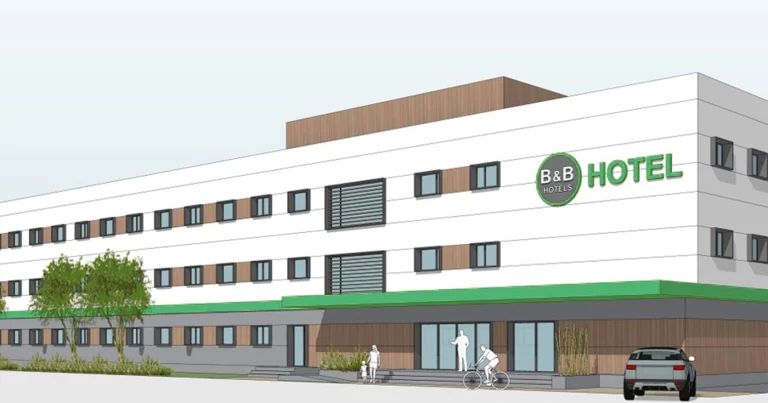
    The Hotel Cruz del Campo project consists of developing a 3-star hotel with 133 rooms, located on a plot in the former Cruzcampo Brewery area, one of Seville’s major urban renewal hubs. The new hotel will have 4,077 m² above ground, common areas (restaurant, lounge, 24-hour reception, terrace), and 41 parking spaces.

    A key strength of this operation is that there is already a fixed lease agreement signed with B&B Hotels for 45 years (15 + 15 + 15), with the first 15 years binding, providing exceptional visibility on operations—a key point for future institutional buyers.

    The construction company estimates a construction period of 18 months.

    Development and Sale to a Real Estate Investor

    This is a capital appreciation project, where Urbanitae investors will co-invest with the manager to finance:

    • The purchase of the land (already secured via a deposit contract and at a 15% discount compared to the September 2025 appraisal).
    • Part of the costs not covered by project bank financing.

    The manager will contribute 10% of the capital with its own funds, ensuring a real alignment of interests.

    Strategic Location in the Cruz del Campo Neighborhood

    The former Cruzcampo Brewery site, with over 200,000 m², has become one of Seville’s most important urban transformation areas, featuring new residential developments, public facilities, green spaces, and strong real estate dynamism.

    The hotel is well-connected:

    • A few minutes from Seville Santa Justa train station
    • Next to Avenida de Kansas City
    • 7 minutes from Sevilla FC Stadium
    • 10 minutes from the airport
    • Close to major economic hubs in the city

    This balance of centrality, connectivity, and urban renewal enhances the asset’s appeal for operators and especially for institutional investors seeking hotels in areas with structural growth.

    Experienced Manager and Top-Tier Operator

    The Hotel Cruz del Campo project is led by Confia Capital, part of the Arcos 21 Group, with over 10 years of experience, 270 projects developed, and activity in residential, hotel, industrial, healthcare, and retail sectors. Their turnkey development expertise and direct capital contribution provide a framework of trust and professionalism.

    Meanwhile, B&B Hotels operates over 80 hotels in Spain and Portugal. Their asset-light model—operating without property ownership—allows for highly efficient occupancy and management, which is especially valued by institutional investors acquiring urban hotels.

    Profitability in 26–30 Months

    The project strategy is clear: develop, open, and sell the hotel to a real estate investor once operational. The estimated timeline is 26–30 months.

    Projected schedule:

    • Q4 2025: Land purchase
    • Q1–Q2 2026: Construction start
    • Q4 2027: Construction completion and hotel opening
    • Q1 2028: Institutional sale and liquidation

    Why Invest in This Project?

    Key reasons to invest in Hotel Cruz del Campo:

    • New-build project in a high-growth urban area
    • 15-year fixed lease with B&B Hotels
    • 15% discount on land price vs. appraisal
    • Experienced manager with aligned interests
    • Seville is experiencing tourism growth and rising hotel demand with limited comparable supply

    For questions, join the webinar with the manager, call us at (+34) 911 23 25 22, or email contacto@urbanitae.com.

  • Urbanitae Real Estate Debt Projects: How to Obtain Short-Term Benefits

    Urbanitae Real Estate Debt Projects: How to Obtain Short-Term Benefits

    At a time when many savers are looking for more predictable instruments less exposed to volatility, real estate debt projects have become a relevant alternative within collective investment portfolios. At Urbanitae, they have been configured as a strategic component alongside equity and rental income.

    What Are Real Estate Debt Projects?

    Unlike the equity model, where an investor acquires a share of the project’s capital, in debt projects the investor acts as a lender. The funds provided are allocated to the developer to finance a phase of the project—such as land acquisition, construction, or renovation—and, in return, the investor receives a fixed interest plus the repayment of the principal at maturity.

    A key feature is that these loans are usually backed by real guarantees. At Urbanitae, many debt projects use loans with mortgage guarantees or share pledge mechanisms, enhancing investor security. This structure allows for known interest flows, defined terms, and greater predictability compared to other market-linked models.

    How Debt Fits Into Urbanitae’s Strategy

    Urbanitae has strengthened its commitment to this type of project in recent years. In 2024, the platform financed 29 debt projects totaling nearly €69 million, representing a 26% increase from the previous year. Additionally, in its annual report, the company noted that around 44% of operations were debt-based and 47% equity-based, with the remainder in rental projects.

    This trend reflects a closer integration of both models: debt is no longer an occasional product but an essential part of the opportunities the platform offers. Urbanitae has even strengthened its internal structure with a specialized debt team, confirming the strategic relevance of this line within its business.

    Debt and Equity: Two Complementary Models

    Debt and equity represent two different ways of participating in real estate, and rather than competing, they complement each other. In the equity model, the investor becomes a project partner and directly shares in its profits. If the development meets or exceeds sales projections, the returns can be significantly higher than debt. However, this potential comes with higher risk, as it depends on factors such as market trends, construction costs, or sales timelines.

    In contrast, debt projects offer a more stable framework: the investor acts as a creditor, receives a pre-agreed fixed return, and has payment priority over equity partners. Their exposure to market fluctuations is lower, making it particularly attractive for those seeking to preserve capital and generate regular short- or medium-term income.

    For this reason, in a balanced strategy, both models can coexist. Debt provides predictability and liquidity, while equity adds long-term value potential. Each suits different investor profiles and complementary financial goals, so the key lies in finding the right balance between them.

    Why Debt Is Gaining Ground Among Investors

    The rise of real estate debt reflects the current context: still-high interest rates, macroeconomic uncertainty, and a highly volatile stock market. In this environment, many investors prioritize assets offering a balanced combination of security, returns, and defined terms.

    Moreover, regulated platforms like Urbanitae have made these opportunities fully transparent, removing the barriers that previously limited debt investment to banks or institutional funds. Retail investors can analyze each project’s information, meet the developer, review the guarantees supporting the operation, and understand exit conditions.

    Thus, real estate debt consolidates as an effective tool not only for attractive returns but also for building a more structured portfolio aligned with the evolving real estate sector.

    Conclusion

    Real estate debt projects offer fixed returns, short terms, and more controlled risk, making them a key element of alternative investments. Their growth does not displace equity but rather expands options for different investor profiles.

    Urbanitae has leveraged this evolution, combining both models with rigor and transparency, positioning itself as a leading platform in Spanish collective real estate financing.

    Ultimately, the rise of real estate debt is not a passing trend but a reflection of a more mature market where investors value planning, security, and a balance between risk and return.

  • New Project! Luxury Villa in Benahavís with Sea Views

    New Project! Luxury Villa in Benahavís with Sea Views

    Urbanitae expands its presence on the Costa del Sol with a new luxury residential equity project in Benahavís (Málaga). Following the launch of Casa Coral, we are announcing the financing of Casa Coragem, an adjacent villa located in the same development – Cerro Artola – and managed by the same developer: Casas Fintech.

    In this case, you can invest on Friday at 16:00 (UTC+1). The webinar will be the same as for Casa Coral, on Thursday at 12:30.

    Both projects share the same philosophy: develop exclusive single-family homes in one of the areas with the highest growth potential in the province of Málaga. With Casa Coragem, Urbanitae investors can participate again in a prime new-build project, with a capital appreciation strategy aimed at increasing value.

    A New Project in a Consolidated Area

    The Casa Coragem project is located at Halcón Peregrino 9, in the gated community of Cerro Artola, within the municipality of Benahavís. The plot enjoys sea views and is close to golf courses, residential clubs, and iconic locations on the Costa del Sol, such as Puerto Banús and Marbella.

    The villa, spread over three floors, will feature seven bedrooms, a gym, a private pool, and garage, all on a plot that combines privacy, contemporary design, and high construction quality. As with Casa Coral, the community stands out for its low density and natural surroundings, reinforcing its appeal as an investment in a scarce, high-demand product.

    A Developer with Proven Track Record

    The project is managed by Casas Fintech, a company specialized in the development and management of luxury real estate assets with international presence. It belongs to the Madre SGPS group, one of Portugal’s most recognized conglomerates, active in sectors such as tourism, energy, media, and healthcare.

    Casas Fintech has solid experience on the Costa del Sol, having financed with Urbanitae the Casa Piemonte and Casa Cazorla projects, both in Benahavís. The first has already been sold above the expected price in the business plan, demonstrating the developer’s management and sales capabilities.

    The projects Casa Coral and Casa Coragem constitute the third and fourth collaborations (fifth and sixth projects) between Casas Fintech and Urbanitae, reaffirming a relationship based on trust and delivering results.

    Investment Structure and Strategy

    As with Casa Coral, Casa Coragem is structured as a capital appreciation operation, through a partnership with the developer for the project’s development. The developer will invest 25% of the total capital, ensuring alignment of interests with investors.

    The funds raised will be used to finance part of the land acquisition, while construction will be covered by a developer loan granted by a financial institution.

    The building permit has been applied for, with expected approval in Q4 2025. Sales will begin once construction is advanced, managed by a local agency specialized in premium housing.

    Preferred IRR of 14%

    Benahavís is one of the municipalities with the highest residential growth potential on the Málaga coast. Its balance of nature, privacy, and proximity to major urban centers makes it a highly demanded area with scarce land availability.

    According to market studies, the expected sale prices are in line with similar villas in the area. The expected investor return is based on a net preferred IRR of 14% per year, with scenarios verified and validated by Urbanitae.

    In addition to profitability, the project offers the security of an experienced manager, the solidity of the co-investment model, and the appeal of a unique real estate asset.

    Estimated Timeline

    The expected duration of the project is 26 to 30 months:

    • Q4 2025: capital increase, land acquisition, and permit approval.
    • Q1 2026: construction begins.
    • Q2-Q3 2028: construction completion and start of marketing.
    • Q1-Q2 2028: villa sale and project liquidation.

    In this video, we explain the key aspects of the project:

    A Double Opportunity in Benahavís

    With the launch of Casa Coral and Casa Coragem, Urbanitae strengthens its presence in Benahavís, one of Europe’s most consolidated prime housing markets. Both projects share location, developer, and philosophy but represent two independent opportunities within the same high-level development.

    Two neighboring villas, the same standard of quality, and a single idea: invest in unique projects.

    We look forward to seeing you.

  • Urbanitae and KPMG Present the First Observatory on Real Estate Development Financing in Spain

    Urbanitae and KPMG Present the First Observatory on Real Estate Development Financing in Spain

    On November 12, Urbanitae and KPMG Spain will present in Madrid the first edition of the Observatory on financing for the real estate development sector, a pioneering study offering a comprehensive view of the financial ecosystem driving real estate development in Spain. This initiative is designed to continue annually, aiming to become a key reference for understanding how access to capital in the sector evolves and how its main actors interact.

    A Sector in Transformation

    The Observatory emerges at a critical moment for development financing. After several years of regulatory changes, tighter credit conditions, and the emergence of new financial instruments, the market has reached an unprecedented level of maturity and diversification. Today, traditional bank financing coexists with alternative equity and debt sources—specialized funds, family offices, or co-investment platforms—that help cover phases and projects where conventional credit has a smaller presence.

    The study, prepared by KPMG in collaboration with Urbanitae, aims to shed light on this new balance, highlighting the complementarity between banks, funds, and alternative financiers. Rather than simply measuring market shares, its goal is to understand how financing is structured at each stage of the development cycle, from land acquisition to delivery of the final asset, and how different sources are combined to optimize project development.

    As Diego Bestard, CEO and founder of Urbanitae, explains:

    “The goal of the Observatory is not only to examine alternative financing but to show the complete picture of the financial ecosystem supporting real estate development in Spain. Each actor plays an essential role at different stages of the project cycle.”

    Methodology: A Broad and Balanced Perspective

    The First Observatory on Real Estate Development Financing in Spain combines quantitative and qualitative analysis. On one hand, a survey was conducted among developers, financial institutions, investment funds, and capital managers to track the evolution of financing sources, access conditions, and expected trends over the medium term.

    On the other hand, the study includes in-depth interviews with representatives from across the financial ecosystem—banks, funds, advisors, and platforms—to provide a more complete and nuanced market view. Participants include Banco Santander, Arcano, FS Capital, Onate, and RTV Grupo Inmobiliario, along with Urbanitae, which contributes its experience as the leading co-investment platform for real estate in Spain and Portugal.

    Thanks to this dual approach, the Observatory offers a rigorous market snapshot: from project capital structures and developer margins to the most widely used instruments—such as bridge loans, debt funds, or crowdfunding financing—and projections through 2030.

    A Shared Goal: Transparency and Dialogue

    This study aims to be more than a situational report. With this initiative, Urbanitae and KPMG seek to promote transparency and professionalization in the sector, providing data that helps developers, financiers, and institutions better understand the evolution of real estate capital and identify synergies between different financing sources.

    Alternative financing—both equity and debt—does not replace banks but complements them. Its role has become essential for projects that require speed, flexibility, or tailored financial structures for new property types, such as flex living or senior living. This balance between actors is crucial to building a more resilient and efficient financial model, capable of supporting sector growth in a context of high demand and limited supply.

    An Initiative with Continuity

    The Observatory is designed as an annual tracking tool to monitor how capital sources evolve and how the sector adapts to new market challenges: rising costs, planning delays, labor shortages, and the need to expand affordable housing supply.

    With this first edition, Urbanitae and KPMG launch a new line of analysis and information for the Spanish development sector, to be updated periodically to reflect changes in real estate financing in Spain.

    The report will be presented on November 12 at Torre de Cristal in Madrid, in an event bringing together representatives from real estate development, banks, funds, and alternative financing.

    Stay tuned for the key findings of the report.

  • New Project! Invest in Branded Residences in Lisbon

    New Project! Invest in Branded Residences in Lisbon

    We’re back in Portugal with an exclusive project. This time, we’re offering you the opportunity to invest in branded residences in the ultra-luxury segment in Lisbon. The project will be available for investment on Monday, February 24, at 4:00 PM (UTC+1). Here are all the details.

    The Overseas Residences project consists of an investment in the renovation of a luxury residential asset in a prime area of Lisbon. The project will include 11 apartments with balconies, a garden, shared pools, and 18 parking spaces. Additionally, the ground floor will feature a commercial unit. This is a branded residence development that will be associated with a high-end brand.

    The asset is located at Praça Duque de Saldanha 11, Lisbon, next to Av. Da República. This is a fully consolidated area in the heart of Lisbon’s financial district, offering all essential services.

    Overseas is a real estate development company specializing in luxury projects, with a strong focus on ESG and electric mobility. The company has a solid track record in Portugal and Brazil, with over 500,000 square meters of construction. Led by CEO Pedro Vicente, a key figure in the Portuguese real estate sector, its team includes professionals with extensive experience in funds, banking, and real estate development. Overseas is also a member of the Portuguese Association of Real Estate Developers and Investors (APPII), reinforcing its industry presence.

    Capital Gains Strategy

    The Overseas Residences project will be structured through a capital increase, where Urbanitae investors will contribute capital to the project’s investment vehicle. The total project funding amounts to €4,070,500, which will be used to cover project costs not covered by the developer or bank until project completion.

    This investment vehicle is in discussions with a leading banking institution in Portugal and Spain to finance part of the asset acquisition and provide additional funding for 100% of the construction development.

    Overseas will be responsible for the project’s full management, contributing 55% of the total investment value.

    The developer has already secured a preliminary planning approval (PIP) for the construction of up to 16 units but has decided to reduce the number of residences to maximize luxury pricing. Construction is expected to begin in July 2025.

    On the commercial front, the developer has already secured two preliminary reservations as a market test and plans to continue sales once construction begins. Sales prices have been validated through a Savills report.

    Preferred Return of 17% IRR

    Urbanitae has agreed with the developer that Urbanitae investors will have priority in returns. Specifically, Urbanitae investors will receive a preferred annual return of 17% IRR on their invested capital. This means that the developer will not receive profits or recover their own invested capital until Urbanitae investors have fully recovered their investment and earned an annual return of 17%.

    In this video, the developer and our Director of Real Estate, Sergio Arana, explain the key aspects of the project:

    The estimated timeline for this project is 34-38 months. Construction is expected to begin in Q3 2025 and be completed by Q1 2028. The handover of units and the exit from the investment vehicle, along with profit distribution to investors, is expected in Q1 or Q2 2028.

    Do you have any questions? Join us for a webinar on Thursday, February 20, at 12:00 PM (UTC+1), where the developer will answer all your questions.

    You can also reach us at contacto@urbanitae.com or call us at (+34) 911 23 25 22.

    Don’t miss this opportunity to invest in branded residences in Lisbon. We look forward to seeing you!

  • New project! Invest in new-build homes in Mijas

    New project! Invest in new-build homes in Mijas

    We are thrilled to present a new capital gains project—the first of 2025—following the success of Varadero and Villa Orquídea. Once again, we’re in the province of Málaga, this time to develop more than 200 homes. You’ll be able to invest starting Friday, January 31, at 12:00 PM (UTC+1). Below, we share all the project details.

    The Residencial Riviera del Sol project involves the development of 215 new-build homes with two, three, and four bedrooms in Mijas (Málaga), all of which include a parking space and storage room. The complex will feature extensive communal areas, including a shared pool, gym, coworking space, social club, and landscaped gardens. The project comprises seven buildings with four floors each, excluding those designated for parking and storage.

    The homes will be located on Granate Street, on an elevated plot with sea views. The land is situated within the Riviera del Sol urbanization, just 10 minutes by car from La Cala Beach, 20 minutes from Marbella, and 30 minutes from Málaga and its airport.

    The developer of this project is a returning partner of Urbanitae. Grupo Rosmarino successfully completed the Monterrey Residencial project, which was delivered in June 2024, and is about to deliver Residencial Santa Inés, expected in the first quarter of 2025. Since 2013, this developer has delivered nearly 1,000 homes.

    Co-investment in real estate development

    The Residencial Riviera del Sol project follows a capital gains strategy, involving a partnership with the developer for the construction of 215 homes. Urbanitae investors will contribute a total of €5,000,000, which will be allocated toward acquiring the land and covering initial project costs until the developer loan is secured.

    Grupo Rosmarino has already signed a private purchase agreement for the land. The building permit was applied for in January 2025, with approval expected in the second half of 2025 or the first quarter of 2026. Construction work is anticipated to begin in the first half of 2026. The project has not yet been marketed but will be spearheaded by the developer, who has significant experience in the area, along with a local real estate agent.

    The developer will oversee the comprehensive management of the project and, along with their co-investors, will also be a project investor, contributing around 61% of the total investment capital.

    In this video, the developer and our Director of Real Estate, Sergio Arana, explain the key aspects of the project:

    Risk-adjusted returns

    Since this is a very early-stage project, the anticipated returns in the business plan are higher than usual—proportional to the risk taken. One of the key advantages of this project lies in the asset’s purchase price: the land for the development is being acquired at a discount of nearly 35% below its appraised value.

    That said, regulations do not allow us to disclose an estimated return figure in advance. As with all capital gains projects, it can be calculated using the project’s financial summary and the following formula:

    (Projected Revenue – Estimated Costs) / Total Equity

    The expected timeline for this project is 44–48 months. The land acquisition and permit application are planned for the first quarter of 2025, with sales expected to begin in the first or second quarter of 2025. Construction is anticipated to start in the fourth quarter of 2025 or the first quarter of 2026, and completion is expected in the third or fourth quarter of 2028. Delivery of the homes and project liquidation are projected for between the fourth quarter of 2028 and the first quarter of 2029.

    Have questions? Join us for a webinar with the developer on Tuesday, January 28, at 5:00 PM (UTC+1), where they’ll answer any questions about the project. We encourage you to participate and invest in this exciting new project!

  • New project! Invest in luxury housing in Cascais

    New project! Invest in luxury housing in Cascais

    We’re excited to present a new project in Portugal, a market where we have financed €25 million throughout 2024. This time, we’re returning to the Lisbon district, specifically to the municipality of Cascais, to develop luxury housing. This new project will open next Tuesday, December 24, at 12:00 PM (UTC+1). Here are the details.

    The Quinta dos Pinheiros project involves the development of a luxury real estate promotion that includes:

    • 18 single-family homes with private gardens, outdoor terraces, private pools, and three parking spaces per unit.
    • A multifamily building with 12 apartments, featuring a garden, terraces, a pool, and parking spaces.

    The asset is located on Rua São Caetano in Estoril (Cascais), just five minutes from the nearest beach and only three minutes from the highway with direct access to central Lisbon. This area is a well-established residential neighborhood with all essential services nearby.

    Once again, we are partnering with Vogue Homes, a developer we’ve already worked with on two projects in Portugal. With 20 years of experience in the Portuguese market, Vogue Homes specializes in premium developments like Quinta dos Pinheiros. Their two previous projects—Paulo Duque and Quinta do Cedro—are currently under construction.

    Construction Can Begin

    The Quinta dos Pinheiros project follows a capital gains strategy. Thanks to contributions from investors, which will total €4,240,000, Urbanitae investors will become shareholders in the project.

    The project already has the pre-information request (PIP) approved, and the parcel division is under approval. This ensures that the conditions for urban planning and land division viability have been established. The architectural and engineering plans for the villas and apartments will be submitted to the municipality through a prior communication procedure. This is possible because with the PIP approved, the municipality does not need to issue additional approvals to begin construction.

    On the commercial side, the developer plans to begin off-market sales once construction starts. Since these are luxury homes, they are expected to have strong market appeal, maximizing sales prices once construction is underway or completed.

    The developer will oversee the entire project, and their contribution will represent 70% of the project’s total equity value.

    In this video, the developer and Sergio Arana, Urbanitae’s Director of Real Estate, explain the project in detail.

    Returns in 34–38 Months

    As with all capital gains projects, the regulator (CNMV) does not allow us to disclose an estimated return. However, you can calculate it using the formula below based on the project’s details.

    (Revenue Forecast – Cost Estimate) / Total Equity

    The estimated timeline for this project is 34–38 months. Construction is expected to begin in the second quarter of 2025 and conclude in the second quarter of 2027. The homes are scheduled to be delivered in the fourth quarter of 2027, at which point the company will be dissolved and profits distributed to investors.

    Next Monday, December 23, at 11:00 AM (UTC+1), we’ll hold a webinar with the developer to address any questions about the project. You can also reach out to us at contacto@urbanitae.com or by phone at +34 911 23 25 22.

    We look forward to seeing you there!

  • New project with Mia Domo in Barcelona!

    New project with Mia Domo in Barcelona!

    We’re excited to present a new investment opportunity in a residential new-build project. This time, it’s another collaboration with Mia Domo, a developer we’ve partnered with three times before. You can invest in this project starting Tuesday, December 10, at 4:00 PM (UTC+1), with a maximum investment of €10,000. Here’s everything you need to know.

    The Mia Nova project involves the development of a new-build complex of 31 residential units in Vilanova i la Geltrú, Barcelona. The properties come with options for garages and storage rooms, and the community features shared amenities, including a swimming pool and landscaped areas. The project is located in Vilanova’s prime residential area, home to the city’s latest new-build developments.

    Vilanova i la Geltrú is a coastal city that offers a wide range of services, excellent connectivity to Barcelona, and a pleasant environment. It’s known for its beaches, marina, and robust infrastructure, making it an ideal location for both primary and secondary residences. The city is just 25 minutes from Barcelona and its airport and 30 minutes from Tarragona.

    We’ve had prior experience with Mia Domo across three projects. Notably, one of these – Mia Garden – was successfully completed, delivering investors an IRR of 10.3%. Mia Domo is led by a team with over 20 years of experience in real estate development, having contributed to the construction of more than 10,000 homes across Spain.

    Building permit requested in June 2024

    The Mia Nova project follows a capital gains strategy, meaning Urbanitae investors will partner with the developer to complete the 31-unit development in Vilanova i la Geltrú. The €940,000 contributed by Urbanitae investors will fund the acquisition of the development site – which will be transferred debt-free – and cover project costs until bank financing is secured.

    The building permit was requested in June 2024, with approval expected in the first quarter of 2025. On the commercial side, 10 reservations (32%) have already been signed for the 31 units in the project since June. Purchase contracts will be finalized following the developer loan’s approval and in parallel with the start of construction, scheduled for the first or second quarter of 2025.

    The developer will oversee the entire project and act as an investor, contributing 15% of the total project capital. An additional 33% of the capital will come from investors sourced by Mia Domo.

    You can learn more about the project in this video:

    Returns in 24-28 months

    The project timeline is estimated at 24-28 months. According to the business plan, construction is set to begin between Q1 and Q2 2025 and will be completed by Q3 or Q4 2026. The dissolution of the project company and distribution of profits to investors are planned for Q4 2026 or Q1 2027.

    A remuneration structure has been agreed upon to incentivize the developer to adhere to the proposed business plan. Once all shareholders’ initial capital contributions are returned, Urbanitae investors and Mia Domo investors will receive a preferred return equivalent to a net IRR (after corporate tax) of 9.6%. Further details about this structure can be found in the Mia Nova project brief.

    As with any capital gains project, regulatory restrictions (CNMV) prevent us from disclosing an estimated return figure. However, you can calculate this return using the information in the project brief and the following formula:

    (Projected Revenue – Estimated Costs) / Total Equity

    Got questions?

    Join our webinar on Thursday, December 5, at 6:00 PM (UTC+1) to ask questions about the project. You can also reach us via email at contacto@urbanitae.com or by phone at (+34) 911 23 25 22.

    We look forward to seeing you!

  • New project! Invest in luxury real estate in Lisbon

    New project! Invest in luxury real estate in Lisbon

    We are thrilled to announce a new project in Portugal. We’re returning to Lisbon to finance six prime residences in the Santo António neighborhood. If you’re interested in investing in luxury real estate in Lisbon, you can do so starting Thursday, November 28th at 4:00 PM (UTC+1). Below are all the details.

    The Castilho 3 project involves renovating a luxury residential asset to develop six multi-family homes with balconies, private outdoor terraces, and five parking spaces in Lisbon. This development is located at number 3 Castilho Street, close to Avenida da Liberdade and Marquês de Pombal Square. The area is fully established, right in the heart of the prime financial district of the Portuguese capital.

    The developer of this project is Mexto, a company specializing in the renovation and modernization of high-end residential properties in Portugal. Among its most notable projects are Fanqueiros Prime Residences and Sta. Marta Prime Living in Lisbon—both of which combine exceptional views and sophisticated design—and Avencas Ocean View Residences, winner of the 2022 National Real Estate Award in Portugal.

    One unit already reserved

    The Castilho 3 project follows a capital gains strategy, involving a partnership with the developer to complete the six residences. Urbanitae investors will contribute a total of €4,522,500, which will cover project costs not financed by the developer loan already agreed upon with a financial institution. Mexto will contribute 30% of the total capital investment.

    One key strength of this project is that the building permit has already been secured, allowing construction to commence in November. Moreover, one of the six residences was reserved on the same day the developer launched the sales process, indicating strong demand. In light of this, Mexto aims to maximize returns by optimizing prices for the remaining units.

    Additionally, a preferred return has been established for Urbanitae investors. Specifically, Urbanitae investors will receive a preferred return on generated profits of 15% annually (IRR). This means that neither the developer nor its partners will receive any profits until Urbanitae investors have achieved a 15% IRR. Furthermore, approximately 60% of the Urbanitae investment will take the form of a bond, giving it priority over the remaining capital contributions.

    In this video, the developer and our Real Estate Director, Sergio Arana, explain the project details.

    Returns in 28-32 months

    As with all our capital gains projects, we are not permitted by the regulator to provide estimated return figures. However, you can calculate them using the following formula:

    (Projected Revenues – Estimated Costs) / Total Equity

    The Castilho 3 project has an estimated timeline of 28 to 32 months. Construction is expected to begin as soon as financing is secured, in November. The project’s completion is anticipated in the first quarter of 2027, with unit deliveries scheduled for the first or second quarter of the same year. Therefore, the company will dissolve and distribute the generated profits among investors in the second or third quarter of 2027.

    Do you have any questions? On Wednesday, November 27th at 12:00 PM (UTC+1), we will host a webinar with the developer to address any inquiries about the project. You can also reach us via email at contacto@urbanitae.com or by phone at (+34) 911 23 25 22.

    Don’t miss this opportunity to invest in luxury real estate in Lisbon. We look forward to seeing you!

  • New project! Invest in Alicante with a 30% reservation rate

    New project! Invest in Alicante with a 30% reservation rate

    We present to you a new capital gain project. This Friday, September 13th at 12:00 (UTC+2), you will have the opportunity to invest in Villajoyosa, Alicante. Here are all the details.

    The Allonbay Urban project consists of the development of a new residential promotion comprising 23 homes, divided into one block of 15 apartments with one, two, and three bedrooms, and another block with 8 one-bedroom apartments. The development also includes 20 storage rooms, 13 parking spaces, and common areas such as a gym, sauna, gastroteca, and solarium.

    Allonbay Urban is located in Villajoyosa, on the town’s main avenue, less than 200 meters from the beach. The development offers sea views on the Costa Blanca and benefits from direct connections to Alicante, as well as tourist spots like Benidorm, Jávea, Denia, and Gandía.

    The project manager is Quadratia, a company founded in 2005, which has participated in the development of over 7,500 homes across the country, with a particular focus on the Mediterranean coast. In addition to its extensive experience, this is the fourth project in which it has collaborated with Urbanitae, following the financing of Allonbay Aura, Allonbay Azure, and Allonbay Alba developments, which are 84%, 57%, and 59% sold, respectively, with construction work ongoing in two of them.

    Building permit requested

    The project follows a capital gain strategy. This means that Urbanitae investors and the developer become partners in the development. Their contributions will go towards the purchase of the plot on which the project will be built and to cover the start-up costs until the developer loan is granted.

    Specifically, Urbanitae investors will contribute 2,080,000 euros, while Quadratia will handle the comprehensive management of the project and contribute 20% of the total investment capital.

    Among the strengths of this project is that commercialization began in June 2024, and 7 of the 23 homes have already been reserved, representing 30% of the total. The signing of the sales contracts will take place after the developer loan is granted and along with the start of construction, which is expected in the second quarter of 2025.
    As for the building permit, it has already been requested and is expected to be granted during September or October 2024.

    Profitability in 26-30 months

    As in all capital gain projects, the regulator (CNMV) does not allow us to provide an estimated profitability figure. Additionally, we are required to present two additional scenarios to the one we consider as the baseline. In all of them, profitability is calculated in the same way, based on the project file data. The formula is as follows: (Revenue forecast – Cost estimate) / Total equity.

    In summary, the estimated duration of this project is 26-30 months. The operation is expected to close in the third quarter of 2024. Construction work is expected to begin in the first quarter of 2025, and between the third and fourth quarter of 2026, the construction is expected to be completed, with the first occupancy license obtained, and the homes handed over. Finally, between the second quarter of 2026 and the first quarter of 2027, profits are expected to be distributed among investors.

    In this video, our CEO, Diego Bestard, along with the developer, explains the key aspects of the project.

    In any case, if you still have questions, you can check out the webinar we held with the developer last Wednesday, September 11th. Additionally, you can contact us at contacto@urbanitae.com and (+34) 911 23 25 22. What are you waiting for to invest in new construction in Alicante with us?

  • What are Urbanitae’s capital gains projects like?

    What are Urbanitae’s capital gains projects like?

    Capital gains projects are our specialty at Urbanitae. Since June 2019, we have funded around 130 projects, with more than 60% focusing on capital gains. From a volume perspective, our capital gains projects (approximately 150 million euros) represent nearly double that of debt projects. If you have invested with us, you already know (almost) everything about them. If not, this article will provide you with all the information you need to know about capital gains projects at Urbanitae.

    Equity and capital gains

    To begin, you will often see us use the terms equity and capital gains projects interchangeably. Strictly speaking, equity refers to the project’s structure, while capital gains relate to the strategy. In an equity project, investors enter the company’s capital; this happens in both capital gains and rental projects.

    The main difference lies in the investment objective. The capital gains strategy is based on the “buy, renovate, and sell” or “buy, build, and sell” cycle. We enter as capital partners of the developer and, therefore, invest in real estate development, with the associated level of risk and return. In this approach, we capitalize on the gains generated by improving the property or constructing homes and meeting market demand.

    In rental projects, this approach is also present but towards the end of the project’s life. Assets rented to solvent and long-term tenants are purchased to generate recurring income from the rent. After three, four, or five years, at the end of the project term, the asset is sold to achieve capital gains.

    How do capital gains projects work?

    A typical capital gains project at Urbanitae would have these characteristics. As in 80% of our projects, it would involve a new housing development. Investors enter to capitalize on the Special Purpose Vehicle (SPV) created specifically for the project and to purchase the land or bear the project’s start-up costs.

    This initial phase is followed by obtaining the license – if not already obtained – and marketing to achieve the pre-sales level required by the bank to enter the operation. Once these milestones are met, the developer’s loan comes in to finance construction. When construction is completed, the homes are delivered until reaching 100%. At this point, the created company is liquidated, and the generated profits are distributed among investors based on their contributions. The dividends received by the investor are net of expenses but subject to taxation.

    Why do we undertake capital gains projects?

    At Urbanitae, we have the flexibility to structure projects as debt or equity, giving us a comparative advantage over other alternative financing providers and real estate crowdfunding platforms.

    We typically choose the capital gains strategy when the economic context makes the risk we assume with financing similar to what the developer faces. When this happens, we ask to be on equal terms regarding returns. Additionally, the residential market is easy to evaluate and offers margins to provide returns to investors within a timeframe not exceeding 36 months.

    However, it’s essential to note that the timelines are estimates and may vary due to factors that are difficult to control – such as not selling at the expected price or pace, not securing bank financing for the project, or construction costs skyrocketing. Therefore, in Urbanitae’s capital gains projects, we always establish safety margins in our calculations to cushion potential difficulties and, thereby, trust that the expected results will be achieved or exceeded.

    If you haven’t invested with us yet, take a look at our projects and feel free to ask any questions. We look forward to hearing from you!

  • How Urbanitae investments are taxed in 2026

    How Urbanitae investments are taxed in 2026

    Updated content for the 2025 income tax campaign, which runs from April 8 to June 30, 2026.

    One of the most frequent questions among Urbanitae investors has to do with taxation: what taxes must be paid on the profits earned from projects and how they are reflected in the tax return.

    The short answer is that it depends on several factors. A natural person is not taxed in the same way as a legal entity, nor does a debt project work in exactly the same way as an equity one. It is also important to distinguish between two concepts that are often confused: withholding tax and final taxation.

    In most cases, if you invest as an individual resident in Spain, the returns obtained through Urbanitae are included in the savings tax base of personal income tax (IRPF), and many payments are subject to a 19% withholding tax. But that does not necessarily mean your final tax burden will remain at that percentage.

    Withholding tax and taxation: they are not the same thing

    This is the first point worth clarifying.

    When a company pays interest or distributes profits, it may apply a withholding tax on account. This withholding is an advance payment of the tax that is later settled in the income tax return.

    For example, if you are entitled to receive 100 euros in profit and a 19% withholding tax is applied, you will receive 81 euros net, and the remaining 19 euros will be paid to the Spanish tax authorities on your behalf. Later, when you file your tax return, those returns will be added to your savings tax base and it will be checked whether that withholding already covered the tax due or whether you still have to pay something more. The general 19% withholding tax on this type of income is provided for in tax regulations.

    That is why, even though in many cases part of the tax has already been paid in advance, final taxation depends on your overall tax situation.

    How Urbanitae investments are taxed if you are an individual

    If you invest as an individual with tax residence in Spain, the usual situation is that the returns obtained through Urbanitae are taxed under personal income tax (IRPF), within the savings tax base.

    Debt projects: interest is taxed

    In debt projects, the return received by the investor takes the form of interest. This interest is taxed as income from movable capital.

    The logic is simple: if you invest 1,000 euros and recover 1,100 euros, the 1,000 euros of principal is not taxed; what is taxed is the 100 euros of interest. A 19% withholding tax will normally be applied to that return.

    Equity projects: distributed profits are generally taxed

    In equity projects, the investor participates in the capital of an SPV and may receive profits when the project distributes results or is liquidated. In practice, when that return is structured as a dividend or profit share, it will generally also be taxed within the savings tax base of IRPF.

    Again, the general principle is the same: what is taxed is not the repayment of the capital contributed at nominal value, but the return generated by the investment.

    What tax rates apply in the savings tax base

    For the campaign corresponding to tax year 2025, filed between April 8 and June 30, 2026, the savings tax base is taxed on a progressive scale.

    The applicable rates are:

    • 19% up to 6,000 euros
    • 21% between 6,000 and 50,000 euros
    • 23% between 50,000 and 200,000 euros
    • 27% between 200,000 and 300,000 euros
    • 30% above 300,000 euros

    This means that the initial 19% withholding tax does not always match the final taxation. If during the year you have obtained more savings income — for example, interest, dividends or capital gains — part of it may end up being taxed at higher rates.

    What usually happens when filing the tax return

    In most cases, if the withholding tax has been correctly applied, that information already appears in the tax data or in the draft return.

    It may happen that the name shown does not exactly match the commercial name of the project, since the Spanish tax authorities usually show the paying company rather than the commercial name by which the investor identifies the transaction. Even so, the withholding will normally already have been correctly allocated, and you will only need to review the data before confirming the return.

    The important exception in equity: liquidation proceeds

    There is one exception worth knowing because it changes the tax treatment quite significantly.

    In some equity projects, the return to the investor may not be channelled as a dividend, but as liquidation proceeds. In those cases, no prior withholding tax may be applied, because in order to calculate the income correctly it is necessary to take into account the value and acquisition date of the investment.

    In practice, this means that if you invested, for example, 500 euros and upon liquidation of the company you receive 530 euros as liquidation proceeds, it is possible that nothing was withheld at the time of payment. In that case, you will have to report in your tax return the investment date, the amount invested, the repayment date and the amount received, so that the software can calculate the corresponding gain.

    This is not the most common scenario, but it is one of the ones that generates the most doubts precisely because it breaks with the usual logic of “they withheld the tax and everything already appears in the draft return.”

    What about wealth tax?

    In addition to IRPF, some taxpayers may be required to report their investments under wealth tax and, where applicable, under the temporary solidarity tax on large fortunes, which remains in force.

    In these cases, the investment in Urbanitae forms part of the taxpayer’s wealth like any other asset. What matters here is not so much a specific rule of the platform, but the general obligation to declare the assets and rights that make up one’s wealth when the legally established thresholds are exceeded.

    How legal entities are taxed

    If the investment is made through a company, then we are no longer dealing with IRPF, but with corporate income tax.

    As a general rule, the interest and profits obtained are included in the entity’s ordinary taxation. In addition, prior withholding tax may also apply to certain payments.

    The main particular feature appears in certain equity investments. When the legal requirements are met — including, in general terms, a holding of at least 5% — the participation exemption to avoid double taxation on dividends and profit shares may apply. That exemption is, as a general rule, 95%.

    Put simply: if a parent company holds a significant stake in another company that has already paid tax on its profits, the law avoids those same profits being fully taxed again when distributed up to the parent company.

    Is there tax deferral as with funds?

    No.

    Investments in Urbanitae do not benefit from the transfer regime applicable to certain investment funds. Therefore, when taxable income arises, that income must be declared in accordance with the general rules, without the tax deferral that may exist in other collective investment vehicles.

    What happens if you invest from outside Spain

    In the case of non-resident investors, taxation depends on the country of tax residence, the type of income obtained and the applicable double taxation treaty, if any. The rules of non-resident income tax provide for specific treatment, and their practical application may vary depending on the case.

    That is why it is best to avoid generalisations here: there is no single valid answer for all foreign investors. If you invest from outside Spain, the sensible approach is to review your specific situation with specialised tax advice.

    In summary

    If you invest in Urbanitae as an individual resident in Spain, the usual situation is that:

    • interest from debt projects is taxed within the savings tax base of IRPF;
    • distributed profits from equity projects are also generally included in that savings tax base;
    • many payments are subject to an initial 19% withholding tax;
    • and your final taxation depends on the total amount of your savings income during the tax year.

    It is also worth remembering three key ideas:

    • The first is that what is taxed is not the capital you recover, but the profit obtained.
    • The second is that withholding tax and final taxation are not the same thing.
    • And the third is that in some equity projects there may be payments without prior withholding tax, especially when the return is structured as liquidation proceeds, in which case it will need to be reported manually in the tax return.

    Final disclaimer

    This article is for information purposes only and does not constitute individual tax advice. The taxation of an investment may vary depending on the investor’s tax residence, financial situation, the type of income obtained and the specific structure of the transaction. If in doubt, it is advisable to consult a tax adviser before filing your return.

  • Estimated or total return?

    Estimated or total return?

    Before talking about returns, it is always worth remembering the maxim of every investor: past returns do not guarantee future returns. The opposite, that is, thinking that because an investment has behaved very well so far, it will continue to do so in the future, leads to one of the basic mistakes when investing: chasing performance.

    This mistake is typical and occurs every day in equity investing. As Nobel laureate Daniel Kahneman explains, “investors are prone to overconfidence, and (…) Overconfidence causes us to misinterpret information and let our emotions cloud our judgment.” This overconfidence causes many investors to choose hot funds – which have performed above average – in the belief that they will remain highly profitable in the future. The reality, however, is that, in general, spectacular profits on the stock market are followed by spectacular falls. Consequently, investors who pursue past performance enter the market at a high price and get very poor, or even negative, returns.

    The principle that past performance does not guarantee future returns does not prevent us from talking about future returns, although we must do so with caution. After all, when we invest we all want to have an idea of what will happen to our money in the future. That’s when the estimated profitability comes into play. To explain what we mean, we will give the example of Urbanitae.

    Estimated profitability in Urbanitae

    Since May 2022, the supervisor of real estate crowdfunding platforms does not allow estimated profitability figures to be advanced in capital gains projects. That’s not to say you can’t estimate the profitability of a project. This calculation is in no way based on profitability from previous projects, but on the business assumptions of the particular project.

    In capital gains projects, Urbanitae carries out an exhaustive study of this business plan presented by the developer and adjusts it downwards – and contrasts it with a third party, such as, for example, Tecnitasa. The result of this adjustment is the forecasts of income and expenses that Urbanitae publishes in the project file, and which serve as the basis for calculating the estimated profitability. That is, the profitability that under normal circumstances the investor can expect.

    In the case of debt projects, the profitability responds to the conditions of the loan agreed between Urbanitae and the developer, specifically the interest and the term set for its repayment. In this case, it is allowed to publish the estimated profitability figure, for two reasons. The first is that the conditions are fixed in advance; the second, to achieve The estimated profitability in a debt project does not depend so much on the future – on how the specific project goes – as on the repayment capacity of the promoter –that is, whether it has the means to repay the loan to investors today–.

    Total profitability in Urbanitae

    The estimated profitability can be total or annual. The total is also known as final profitability or cash-on-cash . When we adjust that total profitability to the term, usually to one year, we are talking about the internal rate of return or IRR, as we explained when we talk about returns in Urbanitae. When the project is not finished, we will talk about estimated CoC or IRR. When it is returned, we can already talk about real CoC and IRR.

    An important aspect to remember is that the returns published by Urbanitae are gross returns. The benefits you obtain for your investments with Urbanitae are taxed as savings income, in tranches that start at 19%. In general, at the time of returning the project, it will make the minimum withholding established by law, precisely 19% of the dividends obtained.

    To finish with the example, nothing better than contrasting the estimate with reality. In the case of Urbanitae, things have gone quite well to date. The platform has returned 22 projects entirely to its investors: on average the annualized return (IRR) reaches 17%, compared to an estimate of 13.5%. The total return, on average, is 20.2%, compared to the forecast of 19.4%.

    If we separate the projects from capital gains, which aspire by nature to higher returns, the figures are even more positive. In equity projects, the final IRR of the nine projects returned to 100% was 19.9%, compared to an estimated IRR of 15.3 %. In debt, the average final IRR was 14.9%, compared to a forecast of 12.2%.

    Not bad numbers, are they? But, you know, before investing, take your time: check the forecasts, ask questions, visit our section of Learn with Matías, call us. And, if you are convinced by what you see, invest.

  • What are the returns on Urbanitae?

    What are the returns on Urbanitae?

    This is a key concept of investments, and almost of life in general. The idea of profitability, or that something pays off, is so widespread that we often use it on a day-to-day basis. For example, to decide if it pays to read this article: I hope so. We won’t steal much of your time.

    The first thing we will clarify is what is that profitability of an investment. You may have seen it mentioned as ROI (return on investment). It is the money you earn, yes, but more specifically we talk about the return or benefit that an investment generates with respect to its costs. It is a ratio, often expressed as a percentage, that summarizes whether an investment is going well or not. It is also useful because it allows you to compare it with other investments.

    Another variable you may have heard of is CAGR. It is closely related to the concept of compound interest, which we have already addressed on other occasions. The compound annual growth rate (CAGR) takes into account, precisely, reinvestment. That is, it shows the profitability that would be obtained if the profits obtained each year were reinvested again in the same product.

    When we talk about profitability in the real estate sector, we usually refer to cash-on-cash. Although they are not equivalent, with the CoC we refer to the total or final profitability of a project: that is, the benefit it has generated once all its phases have been completed. It is, for example, the percentage we use when we talk about projects in Urbanitae.

    But, as we know, CoC profitability, per se, does not tell us much if it is not accompanied by the deadline. A product that gives a 50% profitability can seem very attractive. Knowing whether it is or not will depend on how long it takes to achieve that profitability, that is, the term. If it’s a year, it may be too good to be true; If it is after 10 years, it is not bad, but it is not the same: it would be equivalent to 5% per year, which many would like, but it impresses less.

    That is why it is essential to refer to the terms of the investment. The most common way is to reference the profitability to the calendar year. That is the real litmus test of investments: what benefit, if any, they give after a year. This indicator allows us to better plan the investment strategy and have an idea, even if it is always approximate, of how our investment portfolio will evolve.

    IRR, profitability with capital letters

    In Urbanitae, you will see that we use the acronym IRR a lot to refer to how the projects that we have returned to investors are going. The internal rate of return (IRR) is calculated with a somewhat complex formula, in which we are not going to stop. But it has the advantage that, in a way, it standardizes profitability, since its reference period is one year. Thus, we could summarize by saying that the IRR is the total or final annualized return.

    In Urbanitae we have returned 18 projects to date. While some have been late, many others have finished ahead of schedule. This is one of the main reasons why many of our projects have a higher than estimated IRR: they returned the investment earlier than expected, thus improving their annualized profitability. In other cases, the IRR increases because the total return increases, even if the final term is the one initially planned. In Urbanitae, the average IRR is now 18%, more than four points above the pre-set target.

    For all the above, an attractive investment, in addition to offering a satisfactory combination of profitability and risk – for the investor profile that considers it – will combine return and term well. In general, investments with shorter terms – such as crowdlending projects – will offer lower returns than those that require more patience from the investor – and take greater risks.

    How to know the profitability of a project in Urbanitae

    Over the past year, the regulator of crowdfunding platforms in Spain, the National Securities Market Commission (CNMV), established a more restrictive criterion to talk about returns. At Urbanitae, our profitability calculation is based on a business plan prepared with conservative assumptions and contrasted by third parties. Even so, as in any investment, no one guarantees that the forecast will be fulfilled.

    In this sense, and with the certain premise that past performance does not offer reliable information on future returns, the CNMV considered that the estimated returns of capital gains or equity projects could not be made explicit. Instead, the figures that support this calculation could be detailed so that it is the investor who, in each case, calculates the expected return. By now, you’re sure to know them:

    Total profitability of a capital gains project in Urbanitae

    In addition, the regulator demanded that two additional scenarios be raised in which things were worse than anticipated. A deviation in costs or in sales prices, or both, but enough for the investor to know what would happen to his money if things went wrong. And what would have to happen to lose money.

    In debt projects, it is permissible to speak of estimated profitability. It is understood that, since there is an obligation to repay the borrowed capital within a period and with an interest fixed in advance, it is easier to know what money one will receive. That is because the return is not based on how well or how badly the project is going, but the repayment capacity of the borrower , in this case, the promoter.

    Want to know more? Take a look at our section
    Learn with Matías
    and start investing with peace of mind.

  • What debt projects (or crowdlending) look like

    What debt projects (or crowdlending) look like

    Although it is always the same thing – financing a project – in the world of real estate crowdfunding there are two main types of strategies. On the one hand, there are capital gains projects (also known as equity crowdfunding); on the other, loan or debt projects (also called crowdlending or debt-based crowdfunding). We are not so much interested in names as we are in differences.

    The most key difference is the degree of association of investors with the project. While in capital gains, investors with project partners, in debt projects only lend the money to the developer. In the first case, investors usually enter an earlier phase of the project. They only get their money back once all the homes in the development are built and sold. In loan projects, they recover it when the term expires and with the interest previously set.

    That is why equity projects tend to have longer deadlines. By sharing the risks between investor and developer, the returns are higher. In loans, however, The key is to ensure the developer’s ability to repay.  That is, the risks of the project are similar, since we always talk about real estate development. But the repayment of the loan is not linked, for example, to the sale of all the units. Once the deadline has elapsed, the developer must return the money. If you have what, no problem.

    That’s where the guarantees come in. A clear example is a mortgage. If the loan is accompanied by a mortgage guarantee, that means that the borrower of the money responds, in case of default, with the mortgaged property, for example, the farm where the project is located. If the developer cannot return the money when due, the mortgage is foreclosed and the property, in this case the property, passes into the hands of the lender.

    However, the guarantee must have sufficient value. Therefore, a useful criterion when granting a loan is look at the loan-to-value  (LTV).   In other words, we are talking about the percentage that the loan represents on the total value of the guarantee. The lower the LTV, the safer the loan is considered. It’s logical. If the LTV is 40%, that means that I have lent the equivalent of 40% of the value of the guarantee. If executed, the guarantee would more than cover my exposure.

    Debt in Urbanitae

    At Urbanitae, eight out of ten projects we finance are from Equity  or capital gains. Between The reasons, as Diego Bestard explains, is the difficulty of developers in finding capitalist partners in small and medium-sized projects. Even so We have financed more than 18 million euros in crowdlending.  A total of 19 projects ranging from 300,000 euros to 3 million, such as House of the Waterfall.

    These are figures that we expect to increase rapidly with the launch of our Developer loan. This product is focused on developers who do not obtain financing to start the works despite meeting requirements such as the ownership of the land on which it is going to be developed, the building license granted and a commercialization of between 40 and 60%.

  • Why the long term is good

    Why the long term is good

    The good thing about starting to invest is that you always arrive at a good time. Don’t get me wrong: the most skilled investors are able to see the moment, jump… and reap substantial benefits. But most of us can only hope to counter the ups and downs of the market – and our own inexperience – with patience. That is, with time.

    If you are starting out in the world of investing, you have to have savings and not be in a hurry. As economist Paul Samuelson, winner of the Nobel Prize in 1970, said: investing “should be like staying and watching the paint dry or the grass grow. If you’re looking for thrills, take $800 and go to Las Vegas.” There are two reasons why this is true. The first is that it is very difficult to beat the market. The second, that in the long term you always win.

    That’s why it’s a good idea to start early, for example, today. Since in the long term the market always goes up, if you had started investing 20 years ago today you would have multiplied your money. And, in addition, thanks to compound interest, a small profit grows at an exponential rate over the years. Have you lost? You will understand it immediately with an example.

    Imagine that you invest 1,000 euros in a product that offers a 5% annual return. After 12 months, you will have 1,050 euros. In year 2, that 5% will be applied on a higher amount, so your 1,000 euros will have become 1102.5. In year 10, the compound interest will have increased your 1,000 euros to reach 1,628.89 euros. It’s like a snowball: it’s getting bigger faster and bigger.

    Deadlines in Urbanitae

    And how are the deadlines in Urbanitae ? In real estate crowdfunding there are two main types of projects: those that follow a capital gains strategy ( equity projects) and those that follow a debt strategy (loan projects). There is a third class, which is actually one of the former: rental projects, which are usually structured via equity. But that’s what we’ll talk about in another post.

    Equity projects are usually quickly identified by their term. It is rare for them to go below 20 months. However, loans can perfectly be projects 15 or 12 months ahead, or even less. Why? Because they are completely different.

    In an equity project , Urbanitae investors become partners of the developer. Therefore, they tend to enter a more initial phase of projects and are exposed to greater risks. For example, that the works are delayed, that the license takes longer to arrive, that the houses are not sold … For the same reason, returns are usually higher.

    All this can also happen in a debt project. But they do not condition profitability. As happens when you ask for a mortgage, what the bank requires is to repay the loan in a timely manner. When Urbanitae investors lend their money to a developer, he is obliged to return it once the deadline has expired, and with the agreed interest. It doesn’t matter if in that time he has done well, very well or regularly.

    In Urbanitae, more than 80% of the financing corresponds to equity projects . We are, in fact, the only real estate crowdfunding platform specialized in this type of projects. Although we have made less debt, with the launch of our developer loan in the last quarter of 2022 we expect to increase this line of our business.