Tag: Diego Bestard

Diego Bestard

  • Diego Bestard: “Real estate investment brings peace of mind in an uncertain world”
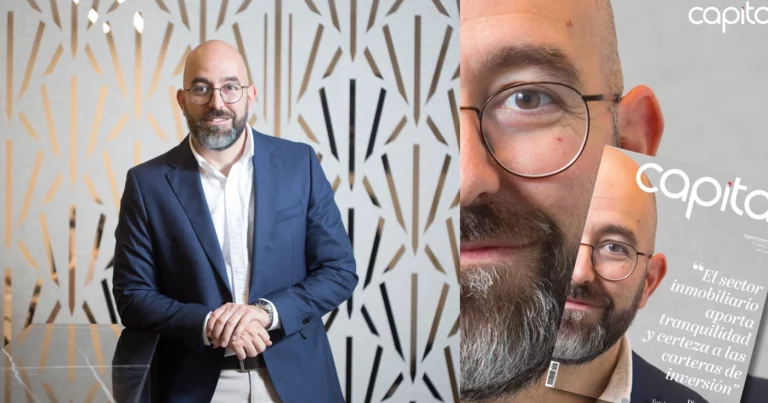
    Diego Bestard: “Real estate investment brings peace of mind in an uncertain world”

    Capital magazine features Diego Bestard, CEO and co-founder of Urbanitae, on the cover of its March issue, with an interview in which he analyzes the current state of the real estate market and the role this asset can play in investment portfolios in a context of growing economic and geopolitical uncertainty.

    Throughout the conversation, Bestard reviews the sector’s recent evolution and explains why real estate continues to be, for many investors, a source of stability compared with the volatility of other financial assets.

    A stable investment asset

    One of the central messages of the interview is the role real estate can play in an environment marked by geopolitical tensions and uncertainty in the financial markets. In this context, Bestard highlights that real estate continues to offer a combination especially valued by investors: tangible assets, structural demand, and medium-term visibility.

    The real estate sector brings peace of mind and certainty to investment portfolios,” says Urbanitae’s CEO in the interview. Compared with the volatility that financial markets may experience in the short term, real estate offers a different dynamic, more closely linked to fundamentals such as housing demand or demographic trends.

    A market with strong fundamentals

    During the conversation, Bestard also analyzes some of the factors shaping Spain’s residential market. Among them is the imbalance between housing supply and demand, which continues to be one of the sector’s major structural challenges.

    The shortage of new supply in certain areas, together with growing demand in major urban areas and in certain international destinations, is helping maintain the strength of the real estate market.

    More real estate investment alternatives

    The interview also addresses how access to real estate investment has evolved in recent years. New financing formulas and digital platforms are enabling more and more investors to participate in projects that were previously reserved for large fortunes or institutional investors.

    In this context, Urbanitae has established itself as one of Europe’s leading real estate co-investment platforms, channeling capital into development and promotion projects and bringing this type of investment closer to thousands of retail investors.

    The full interview

    The conversation with Diego Bestard is part of Capital’s March issue, focused on how to invest in times of uncertainty. It analyzes in greater detail the outlook for the real estate sector, the growing role of private investors, and the evolution of residential development financing.

    You can read the full interview on Capital’s website.

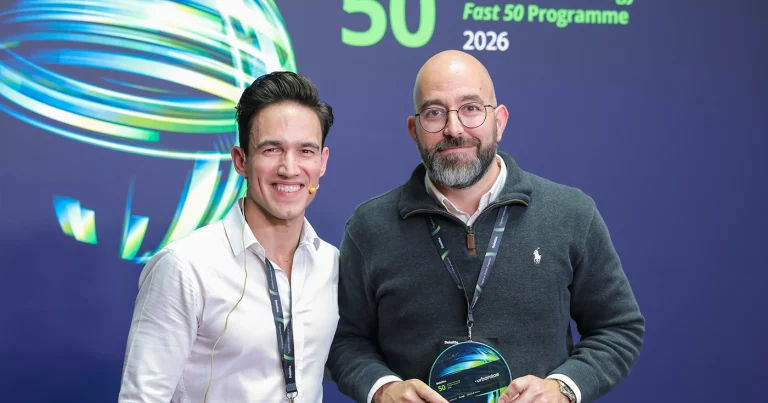
  • Urbanitae joins the Deloitte Technology Fast 50 Programme 2026.

    Urbanitae joins the Deloitte Technology Fast 50 Programme 2026.

    At Urbanitae, we keep building an increasingly solid, scalable, and diversified digital real estate investment model. That’s why we’re especially excited to share a recognition that validates this journey: we have been included in the “Deloitte Technology Fast 50 Programme” for 2026, the ranking that highlights the 50 technology companies with the highest growth and scalability in Spain’s entrepreneurial ecosystem.

    In this edition, we ranked 23rd out of 50 after achieving absolute growth of 389% over the last four years—the key criterion of the ranking, calculated based on the percentage growth in revenue over that period.

    What is the Deloitte Technology Fast 50 Programme?

    The Deloitte Technology Fast 50 Programme is an initiative that seeks to identify and give visibility to the most scalable technology companies in Spain, using sustained revenue growth over the last four years as its benchmark. Beyond the recognition, the programme also acts as a platform to connect participating companies with investors, corporates, and institutions, creating opportunities for networking and visibility.

    It also offers international reach, as it is part of the Fast 50 rankings ecosystem across the EMEA region and can open the door to the EMEA Technology Fast 500, which brings together standout companies from the different Fast 50 rankings.

    Scaling without losing focus

    This recognition comes after a particularly significant year for Urbanitae. In 2025, we surpassed €280 million in transaction volume, with an increase of close to 30% versus 2024, in line with our expansion strategy: more activity, new business lines, and entry into new markets.

    But beyond how much we grow, how we grow matters just as much: with a clear focus on expanding our offering, diversifying it, and continuing to strengthen our value proposition as a reference platform for digital real estate investment.

    At Urbanitae, we identify more with the “camel” philosophy: growing with discipline, focusing on profitability and the strength of the model, rather than chaining funding rounds to chase valuation headlines. That means prioritizing efficiency, building with a long-term view, and raising external funding only when it adds strategic value—without turning it into the engine of the project.

    That’s why, when we bring in new partners, we do so selectively and in an orderly way: strengthening the shareholder base with profiles aligned with the company while keeping control in the founding and management team. The idea is simple: move forward steadily, with a model that can sustain itself and withstand different cycles—without relying on constant rounds to keep growing.

    As our CEO and founder, Diego Bestard, notes, this recognition “confirms that Urbanitae has managed to scale in a solid and sustainable way in a sector as demanding as real estate.”

    From a national ranking to an international window

    Being part of the Fast 50 is not just being on a list. It means joining a community of companies that share a common trait: sustained growth, ambition, and execution capability.

    In our case, the 2026 edition of the programme also includes visibility and access to networking spaces within the ecosystem that supports this initiative, alongside partner organizations in Spain’s tech and entrepreneurial sector.

    In addition, as a company recognized in this edition, Urbanitae will have a presence at 4YFN 2026, one of the key meeting points for Europe’s tech and entrepreneurial ecosystem.

    We keep growing, with a clear idea

    Being part of the Deloitte Technology Fast 50 Programme 2026 is a milestone that encourages us to keep moving in the same direction: building an increasingly complete platform, with more capabilities and more options to invest in real estate, while maintaining the rigor in analysis and the transparency that have defined Urbanitae from the start.

    Thank you to everyone who makes this possible—investors, developers, partners, and our team. We keep going.

  • “Talking about money is also financial education”

    “Talking about money is also financial education”

    On October 16, Urbanitae participated alongside Confidencial Digital in a roundtable on financial education. We wanted to create a space to reflect on the state of financial education in Spain, its structural shortcomings, and its role as a tool for personal autonomy.

    The debate, moderated by Fernando Alonso, partner at finReg360, brought together representatives from the financial and advisory sectors: Leonardo López (ODDO BHF), Jorge González-Iglesias (Gibobs Allbanks), Carlos García Ciriza (Aseafi), Sara Carbonell (Banco BIG), Victoria Torre (Self Bank), and Jaime Albella (CFA Society Spain). Urbanitae was represented by our CEO, Diego Bestard. Here are some of the topics discussed during the conversation.

    The Culture of Money (and Silence)

    During his speech, Diego Bestard emphasized that financial education in Spain is not only scarce but also remains a topic people tend to avoid. “In the United States, it is common to talk about money within families, at school, or with friends. Here it is still a taboo. Money is neither taught nor discussed, and this has consequences,” he stressed.

    While in some neighboring countries students study business subjects as early as age 13, in Spain “home economics and basic personal finance management are still absent from the school curriculum,” he recalled.

    In his view, financial education should be taught as a core subject, on par with English or mathematics. But it should also be seen as a cultural shift: “It’s not enough to learn about compound interest; we need to normalize conversations about money.”

    Saving, Investing, and Planning

    The lack of financial education directly affects people’s ability to save, invest, and plan for the future. Many Spaniards do not have a financial strategy or make full use of investment tools to grow their savings.

    “You don’t need to be an economist, but everyone should have basic knowledge of personal finance. Managing income, expenses, and savings should be as fundamental as reading or writing,” said our CEO.

    Several experts agreed on the tendency of Spaniards towards short-term thinking, which remains deeply rooted. For example, many consistently choose bank deposits when there are safe, profitable options that allow building long-term wealth.

    Among the causes of this behavior, Diego pointed to lack of planning, excessive reliance on the public pension system, and limited tax education. “In Spain, there is a sense of social safety—State, family, friends—that, although positive, reduces the incentive to plan long-term,” he explained.

    Digital Gap and New Generations

    One of the most discussed topics was digital inclusion. While younger generations navigate the digital environment easily, a significant portion of the population still struggles to manage finances online.

    Still, Bestard highlighted the positive role of technology: “Digitalization has democratized access to investing. Today, anyone can invest easily, safely, and transparently, without advanced knowledge.”

    Not everything is positive. The younger generations show more curiosity and interest in investing and understanding money, but that curiosity must be paired with education and judgment. “Curiosity is good, but without knowledge it can lead to mistakes. Financial education must channel that energy into informed decisions.”

    Spain and Europe: Two Speeds

    Spain lags behind other European countries in financial education. The speakers agreed on the diagnosis: an educational system that does not prioritize practical training, a culture that avoids talking about money, and excessive reliance on the State to address future economic needs.

    Despite this, there is room for optimism and a sense of opportunity. A shift in trends among younger generations is evident. “There is more interest, awareness, and willingness to learn. The key now is to provide the right tools,” said Bestard.

    Our Commitment to Financial Education

    At Urbanitae, we believe financial education is key to democratizing investment and fostering economic autonomy. That is why we launched Urbanitae Academy, a free platform that helps anyone—investors or not—acquire basic knowledge about saving, risk, and real estate investment.

    We continue developing new content and courses to be released before the end of the year, with the goal of promoting a more open, conscious, and accessible financial culture for everyone.

  • Urbanitae at SIMA 2025: Our Participation as a Key Industry Player

    Urbanitae at SIMA 2025: Our Participation as a Key Industry Player

    Urbanitae once again took part in Spain’s leading real estate event, SIMA 2025 — and we did so in a big way. For the fourth year in a row, we participated as official partners of the fair, reinforcing our commitment to accessible, professional, and transparent real estate investment. This year, we were also partners of SIMAPRO and the Small Investor Forum, two key platforms for dialogue between professionals, developers, and individual investors.

    With more than 100 square meters, our stand was one of the largest at the event. A modern, open, and functional space designed to foster direct and close relationships with visitors. Over the course of the four-day event, hundreds of attendees came to learn first-hand how our real estate co-investment platform works and what advantages it offers compared to other investment models in the sector.

    A SIMA with the spotlight on individual investors

    SIMA 2025 confirmed an upward trend: the growing interest of individual investors in the real estate market. Today, one in four visitors to SIMA falls into this category, and the SIMA Invest area reflects this reality. More than 90 companies and institutions came together in a space specifically designed to address investors’ needs — from small savers looking to buy and rent out property to more sophisticated profiles exploring options like real estate crowdfunding.

    At Urbanitae, we hosted more than 20 public talks at our own Urbanitae Auditorium, located within the exhibition. Our CEO, Diego Bestard, led two of these sessions, explaining how our platform works, what types of projects we offer, and how we select investment opportunities.

    An event with a networking flavour

    One of the standout moments of this edition took place on Thursday 22nd, when we hosted an exclusive event for developers — a crossover with two iconic brands: New York Burger and Mahou. Pablo Colmenares, executive chef at New York Burger, joined us at our stand to prepare his acclaimed Brisket 2.0 burgers live. Our guests enjoyed them paired with Mahou Cinco Estrellas Reserva. A delicious evening — in every sense — that helped further strengthen ties with our strategic partners.

    Urbanitae’s voice in the sector’s forums

    Our CEO, Diego Bestard, had an active role in SIMA’s professional forums. In the Small Investor Forum, he gave two talks focused on how crowdfunding is democratizing access to real estate investment and allowing thousands of small and mid-sized investors to diversify with minimum tickets of just €500.

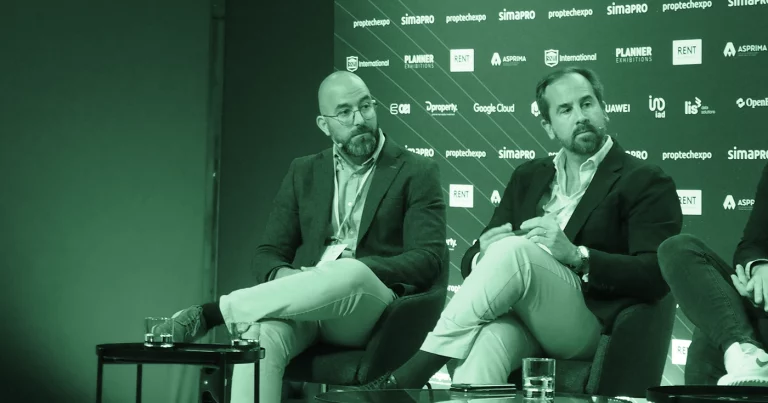
    He also took part in two roundtable discussions at SIMAPRO and the Real Estate Innovation Forum, where he shared the stage with other prominent sector figures such as Guillermo Estévez de Cominges (Gradual), Jaime Gil (Prophero), Borja Guaita (Metrovacesa), Bernat Martínez (TW Eurocredit), and Asier Uriarte (Izilend).

    In the first panel, dedicated to innovation in residential development, Diego emphasized that Urbanitae’s real innovation is not technological but structural: “The most innovative thing we’ve done is to allow many investors to access opportunities that were once reserved for large capital. This not only opens the door for smaller investors, but also enables true diversification.” As he noted, “we’re approaching €500 million invested and have financed nearly 1% of new housing in Spain.”

    On the developer side, Guillermo Estévez de Cominges (Gradual) agreed on the need for continued innovation, not only in product, but in how we attract and engage clients: “The real challenge is aligning real estate development with new user expectations and implementing technology that genuinely enhances the buyer experience and the efficiency of the process.”

    In the second panel, focused on new living models, Diego discussed the challenge of financing new residential formats such as coliving, cohousing, or senior living: “There’s clear demand from both the market and investors, but there’s still a long way to go before these projects fit into traditional financing structures. At Urbanitae, we strive to be flexible and assess each case with an open-minded approach.”

    Asier Uriarte, from Izilend, added that “senior living will become a structurally growing segment in the coming years. But to attract more capital, it’s essential to standardize the product and prove it works financially.”

    SIMA 2025: A Key Year for Investment

    This edition of SIMA was the most international to date, with a 10% increase in floor space and 15% more participating companies. Overall, SIMA was structured into four major complementary areas: SIMA Expo, SIMA Invest, SIMAPRO, and Proptech Expo. The event thus cements its position as the leading residential real estate showcase in Spain and one of the most important in Europe.

    In this context, Urbanitae is positioning itself as the benchmark platform for real estate co-investment in Europe. Our participation in SIMA 2025 was a further demonstration of our commitment to transparency, responsible innovation, and accessibility in real estate investment.

    See you at SIMA 2026. In the meantime, we’ll keep working — project by project — to bring you the best investment opportunities.

  • Is it still a good time to invest in real estate?

    Is it still a good time to invest in real estate?

    In the first part of 2024, the market fundamentals have changed little compared to 2023. Nevertheless, it is worth asking whether it is still a good time to invest in real estate.

    At first glance, it might seem that the residential real estate sector is cooling down. According to the General Council of Notaries, a total of 640,000 home sales were made in 2023. This figure represents a decrease of 11.2% compared to 2022. Additionally, the signing of mortgages to buy homes fell by 21.3%.

    However, a closer examination reveals the causes of these declines. On one hand, the figures achieved in 2022 (and 2021) were recently record highs. It is normal that after historically high figures are recorded, there is a regression to the mean. That is, a return to levels closer to the historical average.

    To this is added the issue of demand. According to Asprima, last year, 200,000 fewer homes were built in Spain than needed. The real estate developers’ association in Madrid points out that it is essential to increase housing production to correct the imbalance between supply and demand.

    Housing prices, far from decreasing

    It should also be noted that housing prices continue to rise. In January alone, the square meter increased by 7.5% annually, according to Fotocasa data. In 2023, housing prices rose by 5%, according to the appraiser Tinsa. And for 2024, experts are revising their forecasts upward. For example, CaixaBank, which now estimates a 3.5% increase for this year (compared to 1.4%).

    That’s why, despite the decline in transactions and mortgages, “the answer is yes, it is a good time to invest” in real estate, explains our CEO, Diego Bestard. “But you have to see where: it’s not the same to invest in residential as in commercial… And then it’s also true that it’s not the same to invest in the center of Madrid or Barcelona or invest in coastal areas or second homes.”

    Real estate investment will rebound in 2024

    The initial estimates indicate that it is indeed a good time to invest in real estate. The consulting firm CBRE estimates that real estate investment in Spain will grow between 5% and 10% this year. Once again, the forecast of €12.5 billion in real estate investment in 2024 is far from the record levels of 2022 (over €17.6 billion), but it points to a clear recovery.

  • “I want Urbanitae to be the first choice for real estate investment”

    “I want Urbanitae to be the first choice for real estate investment”

    At Urbanitae, our goal is to democratize real estate investment, ultimately meaning that “anyone who wants to invest in real estate should first think of Urbanitae, and second, of buying a property.” These are the words of our CEO, Diego Bestard, in a recent interview with Capital magazine.

    During the interview, Diego Bestard provides a comprehensive overview of the current state of real estate investment and, of course, the present and future of Urbanitae.

    Real estate investment to rebound in 2024

    The effects of interest rate hikes were felt in real estate in 2022 and 2023. According to CBRE, last year real estate investment in Spain fell by 36%, albeit after a record-breaking year. “Major global investment groups have shifted from investing in real estate to focusing on assets that, due to risk or profitability, made more sense for them in this period of high interest rates,” explains Bestard.

    It’s important to note that, in the case of Urbanitae, the reality was precisely the opposite. With over 118 million funded, we increased funding by over 80% compared to the previous year, closing 2023 with an annual return of 16%.

    With interest rate declines on the horizon, it seems that 2024 could be a year of reactivation in real estate investment: again, according to CBRE, it could grow up to 10% in Spain. Bestard points to a recovery in demand for new construction housing, “although we will continue to see increases in housing prices due to a lack of supply.”

    The role of banks

    In this context, banks seem to be in a very different situation than the one that precipitated the 2008 crisis. As Diego explains, “in the past, the bank financed the purchase of land, construction, promotion… the entire process. The developer risked very little capital and assumed a risk higher than what they could afford.”

    Today, as we know at Urbanitae, banks are practically prohibited from financing land. Additionally, they require around 50% of pre-sales and obtaining the construction license to grant developer loans.

    In this context, Urbanitae emerges as a natural partner to cover the financing needs of developers that banks cannot reach. “In the more than 130 operations we have carried out, in approximately 100, we are hand in hand with the bank, either because we are financing the construction with the bank or because the bank itself has brought us the operation for us to enter the capital, and they can go on to finance the debt,” explains our CEO.

    France, Portugal, Italy… America?

    Regarding Urbanitae, international expansion is one of our strategic objectives for 2024. We have just announced the expansion of our team in France and Portugal. We hope that the addition of José María Carpio and Simão Cruz will bear fruit during the first quarter of the year. Italy is the next step, but Bestard does not rule out new markets: “We do not rule out the possibility of entering the United Kingdom or, eventually, even jumping to America. Probably more the United States than Latin America, to start.”

    Why invest in crowdfunding

    The acceptance of real estate crowdfunding and, in particular, the model proposed by Urbanitae, is crucial in future plans. In this regard, our CEO highlights the attractions of investing in real estate through crowdfunding: the possibility of diversifying into 20 or 40 different assets; investing in an asset that preserves its value very well, and simplicity: “It is important to understand where we are investing, and real estate allows that, it is something tangible.”

    Want to know more? In the interview, Diego talks about how he sees Urbanitae in five years, what drives the company, sustainability, and even gives advice to entrepreneurs. We invite you to read it!