The real estate sector in Spain is currently experiencing a highly dynamic moment at all levels. The macroeconomic context and falling interest rates have led to a revitalization of real estate activity, and the outlook suggests that this upward trend will continue into 2025. However, much will depend on what happens across the Atlantic: the start of Donald Trump’s second term in the White House has shaken (and promises to continue shaking) the global economy; his announcement of tariffs on a global scale has hit stock markets hard, and it remains to be seen how far these measures could lead to a global inflationary scenario.
In this context, real estate continues to be considered a safe-haven investment asset. However, the shortage of available land for new developments has brought to light the need to reorganize buildings and give them a second life, becoming a new trend in the sector.
According to a recent CBRE report, building conversions doubled in activity during 2024, increasing from nearly 30 operations a year to 70. The report estimates the total transaction value at €900 million, clearly reflecting the economic weight of these conversions in the industry. Another figure that highlights their impact is that the 70 changes of use in 2024 represented a total area of 390,000 square meters—equivalent to 55 football fields.
Living sector on the rise in Spain’s real estate market
The boost in tourist and residential demand in Spain—especially the latter, combined with limited supply—has been the key driver behind the increase in use changes. Of the total conversions, 45% were aimed at the living sector, which includes housing and new living arrangements such as coliving and flex living.
The hotel sector accounted for 34% of the total, with a notable focus on luxury property transformations. Rounding out the top three were alternative sectors (15%), particularly the health segment, which includes hospitals and nursing homes. All of this growth came at the expense of the office segment. In fact, 60% of all operations involved a building previously used as office space, and of the ten largest conversions of the year, nine were from office use to another format.
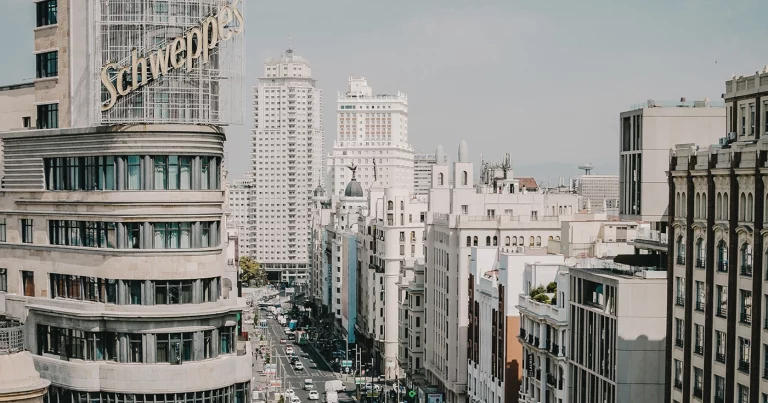
By region, Madrid accounted for 60% of all operations, positioning itself as the strongest location nationwide, with a strong emphasis on office conversions (83%). However, despite its dominance, it lost 14% compared to 2023, with other provinces such as Málaga and Barcelona multiplying their conversion rates last year. Other notable provinces include Seville, Alicante, Huelva, Zaragoza, and Bilbao.
Almost one billion euros in investment
In 2024, more than half of all real estate conversions involved investments totaling over €900 million, nearly three times the amount in 2023. This increase reflects strong growth compared to the overall real estate market in Spain.
The Living sector became the preferred investment target for these conversions (74%), while office buildings were the most common starting use (81%). These figures align with CBRE’s 2025 European Investor Survey, which ranks Living as the top sector for investment in Europe.
In terms of location, Madrid concentrated 85% of the total investment volume, followed by Barcelona (10%) and other regions (5%). The standout transaction was the purchase of a building at María de Molina 50, intended for luxury apartments and a student residence, for over €200 million. Still, more than 70% of the operations were under €20 million, indicating a focus on medium-sized and midcap assets.

Factors driving this trend
The rise in building conversions has gained momentum largely due to a combination of economic, social, and regulatory factors. On one hand, the shortage of available urban land in major metropolitan areas has led developers and investors to focus on existing assets with transformation potential.
Added to this is the pressure to adapt the real estate stock to sustainability and energy efficiency criteria, making rehabilitation and repurposing more viable alternatives than new construction. Additionally, changes in lifestyle and work habits—such as remote work and growing demand for flexible residential solutions—have sparked interest in innovative housing models. Lastly, public sector actions, including tax incentives and more flexible regulations in certain cities, have facilitated and accelerated these types of operations.
Challenges and considerations
However, the boom in conversions also brings significant challenges. The legal and technical complexity of adapting a building to a different use can entail high costs and long execution times. Urban planning regulations, heritage protection, and the need to upgrade basic infrastructure often require careful analysis and management. Moreover, economic viability is not always guaranteed, especially in locations with lower demand or in large-scale projects that require significant upfront investment.
Another key aspect in Spain’s real estate market is social acceptance of the new use, especially when urban fabric is altered and community coexistence is affected. In this context, the success of conversions will largely depend on solid strategic planning, effective public-private collaboration, and a long-term vision that prioritizes sustainability and urban cohesion.
What’s driving this growth?
The lack of buildable land in city centers has led to a nationwide problem in the real estate sector. This has driven up prices and resulted in insufficient supply to meet high demand—reflected directly in pricing.
Since the pandemic, a teleworking model has been structurally implemented, offering greater flexibility to workers, but also marking a turning point for companies paying for office space that remained empty. Since then, many organizations have opted to eliminate or relocate their offices, leaving these spaces available to meet new market demands—definitively transforming Spain’s real estate landscape.