More and more European cities are struggling to ensure access to decent and affordable housing. Among young Europeans, 30% still live with their parents because they cannot afford to move out. In Spain, the figure rises to 48%, according to Eurostat data.
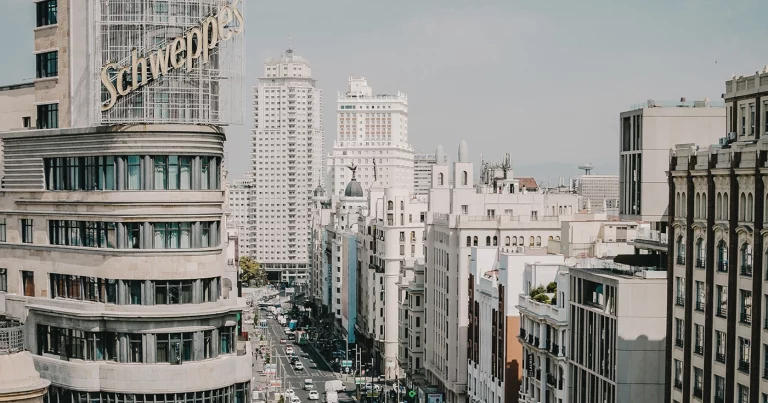
One explanation for this phenomenon lies in rental prices, which have soared across Europe over the past 15 years — increasing by almost 27%, according to the same institution. However, Vienna stands out as a major exception. Although it may sound utopian, the Austrian capital is considered the city with the most affordable rental housing in Europe, with an average price of just €8 per square meter, even including utilities, according to Wiener Wohnen, the largest public housing company in Europe. This figure is striking, especially when compared to Madrid’s average of €20.9 per square meter — 161% higher.
How is this possible? Vienna’s public rental model is the result of 100 years of social-democratic tradition and the design of an infrastructure built by and for citizens, enabling around 60% of its population to live in municipal or subsidized housing.
Affordable housing aimed at building community
The Viennese model originates from public policies developed during the 1920s, when the first municipal housing complexes, known as Wohnhausanlagen, began to appear. After the war, the city was devastated and faced a severe housing crisis. Solving it became a priority for the Austrian Social Democratic Party, which implemented new housing policies, marking the beginning of “Red Vienna.”
Between 1923 and 1934, more than 65,000 housing units were built, offering quality living spaces at affordable prices, often surrounded by gardens. This vision endured despite political changes, and today, most of these buildings are managed by cooperatives and non-profit associations.
The guiding principle was clear: to make housing a right with stable prices — something the Austrians have successfully maintained ever since. Today, 43% of Vienna’s housing stock remains publicly managed, with the City of Vienna directly overseeing nearly 220,000 residential units, according to official city data.
Karl Marx-Hof and other iconic examples
The most emblematic example of Vienna’s social urbanism is Karl Marx-Hof. Built between 1927 and 1930, it was the first residential complex to implement this new urban planning concept — spaces designed to build community while ensuring functionality and quality of life.
Stretching over 1.2 kilometers and housing more than 1,300 apartments, Karl Marx-Hof is one of the largest residential buildings in the world. It includes libraries, daycare centers, inner gardens, and even its own municipal museum.
Vienna’s commitment to affordable housing continued in later decades, with another landmark example: Wohnpark Alterlaa. Built between 1975 and 1986 and home to 10,000 residents, it exemplifies the same principles of dignity and practicality in housing design.
How affordable housing is managed in Vienna
Access to public housing is managed by Wohnberatung Wien (Vienna Housing Advisory Service), the only official channel for entering Vienna’s affordable rental system, directly linked to the local city council.
To qualify, applicants must meet basic requirements: be at least 17 years old, have lived in Vienna for at least two years, hold Austrian nationality or a residence permit, be in need of housing, and not exceed certain income limits — €53,000 gross per year for an individual or €79,000 for a couple.
One of the system’s greatest advantages is the possibility of holding a lifelong lease — and even passing it on to one’s children. Furthermore, if a tenant’s financial situation improves, they do not lose the right to live in public housing. This ensures that the benefit is not merely temporary but provides long-term residential stability.
Lessons learned: urban planning and public policies
The combination of effective public policy and well-planned urban design has been key to Vienna’s success. Because the city directly controls and manages its housing stock, it can balance supply and demand, regulate prices, and guarantee accessibility for residents.
According to various institutions such as the Court of Auditors and the OECD, Spain is among the European countries that invest the least in social housing — spending five times less than the European average.
Moreover, only 1.6% of Spanish households live in affordable rental housing. In Madrid, unlike Vienna, the public housing stock is extremely limited — fewer than 9,000 social rental units, accounting for less than 1.5% of total housing — yet it remains the Spanish region with the largest number of such units. In Barcelona, the country’s second-largest city, the situation is not much better, with the affordable housing supply even decreasing by 2.7%.
So how could Spain apply Vienna’s example? By increasing investment in the construction and maintenance of public housing — through initiatives such as the PERTE for industrialized housing, greater public spending by the Ministry of Inclusion, Social Security and Migration, and expanded private financing for housing projects.
This is where companies like Urbanitae play a crucial role, channeling funding to developers, builders, and project promoters who need financial backing. Through its collaborative investment platform, Urbanitae facilitates access to private capital for residential (both protected and market-rate) and commercial real estate projects that often fall outside traditional credit channels.