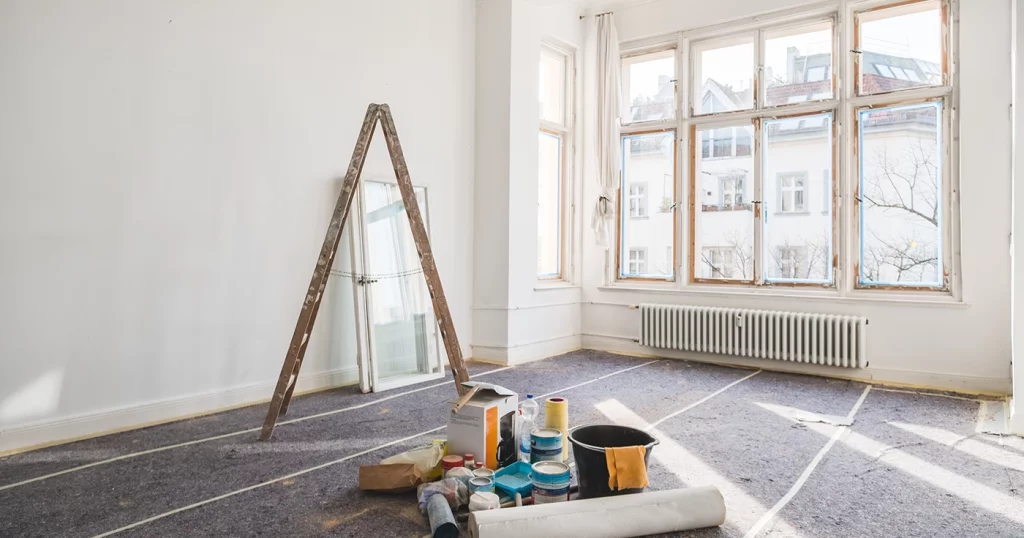
Spain has the oldest stock of residential properties in Europe: 50% of all homes are over 40 years old, amounting to a total of 9.7 million homes. Additionally, according to the latest available data from the Spanish government, around 1 million of these properties are considered to be in poor, bad, or dilapidated condition, showing that most do not comply with current energy efficiency regulations or meet the new demands of the market.
If the owner of a property in poor condition or with a low energy rating wants to rent it out, they will likely opt for minimal investment, considering the expected returns will be low. However, a property with some age, while it may not be attractive to many, can catch the interest of investors looking to renovate it in order to rent it out and achieve greater profits — a strategy known in the industry as BRRRR, coined by self-proclaimed entrepreneur, investor, and writer Brandon Turner.
The BRRRR investment strategy stands for Buy, Renovate, Rent, Refinance, and Repeat. This method focuses on acquiring undervalued and therefore more affordable properties, then renting them out, refinancing the mortgage to obtain liquidity, and repeating the process. Renovating a property increases its value, allowing the rental price to be raised. The ultimate goal is to build a portfolio of real estate assets that generate monthly rental income.
How does the BRRRR strategy work?
The first step for those following this strategy is to research the real estate market in the city or area where they want to invest — understanding what tenants are looking for, which areas are more exclusive, which areas are more affordable for younger or university lifestyles, and so on.
Before starting, it’s important to understand that not all properties have the same level of habitability, and sometimes they might not even qualify for a necessary appraisal, for example, if the property is currently occupied.
It is also essential to ensure that the rental income will generate enough net profitability to cover the investment made in acquiring and renovating the property. To evaluate this, examples of similar properties in the same area can be considered. Once the home is rented to a reliable tenant, the investor refinances the mortgage to obtain capital to buy another property.
Why did it become popular in the United States? Does it make sense in Spain?
The BRRRR strategy for retail investors gained many followers about 10 years ago in the United States thanks to the rise and viral spread of operations promoted by personalities like Brandon Turner, who touted the success of the method, claiming it’s the best way to grow your wealth “without losing your soul.”
At an institutional level, this investment technique has also grown over the years among investment funds and with the emergence of proptech companies like Clikalia. However, these institutional players differ as they do not depend on mortgage financing to manage property expenses. For individual investors, though, this formula may not be as suitable in Spain, given the more limited financing options compared to the U.S., less favorable mortgage market conditions, and rising property prices, with a forecasted growth of 5% by 2025 according to CBRE.
When deciding whether this type of investment is worthwhile, several factors must be considered, such as the potential increase in property value after renovation. According to the 2023 Report on Housing Renovation in Madrid and Barcelona published by the appraisal consultancy Gesvalt, a full renovation can increase property values by up to 35% in Madrid and 42% in Barcelona. This figure is lower in cases of partial renovations, at 16% and 19% respectively.
However, renovations also involve significant expenses: for an average-sized property, a full renovation typically costs between €68,000 and €75,000, according to the Habitissimo portal. Additional costs include appraisal fees for refinancing, bank and notary fees, and possible delays that could prevent timely rental. These costs can amount to thousands of euros and may therefore reduce the net profitability of the asset, complicating the process.
In this sense, the investor must budget carefully and assess which financial risks they can assume, as well as the time and effort investment required for searching, purchasing, and renovating properties — all while evaluating whether the returns will be sufficient to justify the effort and if the monthly rental income from tenants can be guaranteed.
If the effort/costs/profitability ratio is not favorable, investors should consider other options that better meet their needs within the real estate sector, such as real estate crowdfunding.
How to invest in real estate profitably without the effort: crowdfunding
Real estate crowdfunding is an investment vehicle for financing new construction projects and is especially appealing for investors who either lack the resources to purchase a property outright or simply do not want to invest the time and effort required for complex BRRRR opportunities.
Platforms like Urbanitae allow users to invest in new development projects with a minimum ticket of just €500, entirely online and without leaving home. Once the registration process is complete, the platform provides detailed information about all ongoing projects, making it easy for users to decide how to invest their money. The investment is made directly through the platform’s website, eliminating the need for bureaucratic paperwork or in-person meetings. Investors simply wait for the project’s sale to receive their profits, which are automatically transferred to their Urbanitae account — from which they can either reinvest in new projects or transfer the funds to their bank account.