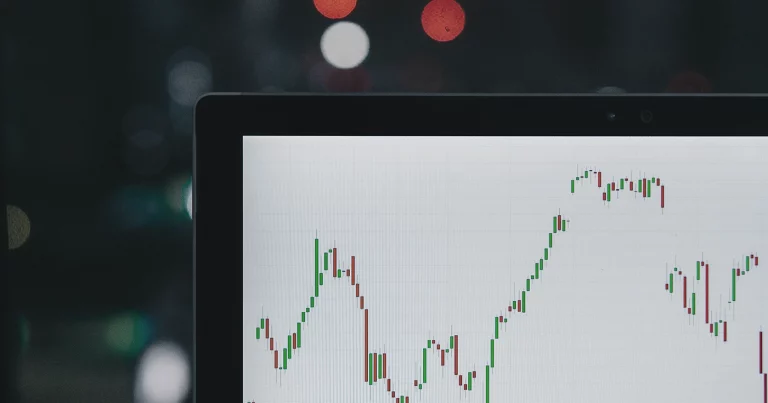
When it comes to making financial decisions, one of the fundamental yet often misunderstood concepts is the risk-return tradeoff principle. This principle is not only present in complex investments but also appears in simpler financial choices, such as saving money in a bank versus investing in the stock market. At its core, it establishes a simple relationship: the higher the risk, the greater the potential return—but also, the greater the possibility of loss. Therefore, any investment decision must carefully balance this relationship, adapting to each individual’s financial goals and risk tolerance.
In this article, we will explore how investors can apply the risk-return principle to make smart decisions. We will analyze strategies for managing this balance and how to evaluate investment performance. The goal is to provide practical and comprehensible tools to better understand how this principle guides financial choices.
Understanding risk and return
The essence of the risk-return tradeoff lies in the evaluation of our priorities and goals. For example, someone approaching retirement may prioritize the security of their savings, opting for low-risk investments such as government bonds or fixed-term deposits. These options, while not offering high returns, are more stable and predictable. In contrast, a young investor with a longer time horizon may be willing to accept higher risks in exchange for potentially higher returns by investing in emerging companies’ stocks or private equity funds.
It is important to consider that the level of risk does not only depend on the type of asset but also on external factors such as the global economy, interest rates, and inflation. For instance, during periods of high market volatility, even investments considered “safe” can be affected. Therefore, the key to effectively applying the risk-return tradeoff principle is to assess both our personal goals and market conditions.
Tools to measure the risk-return tradeoff balance
Risk management in investments cannot be done without the proper tools to evaluate available options. This is where metrics such as alpha, beta, and the Sharpe ratio come into play, each serving a specific purpose.
- Alpha: This indicator measures whether an investment has outperformed or underperformed a set benchmark, such as a market index. A positive alpha indicates that the investment has performed better than expected, while a negative alpha suggests the opposite. This analysis helps identify whether we are achieving a higher-than-market-standard return for the risk we are taking.
- Beta: This metric represents an investment’s sensitivity to market fluctuations. A beta of 1 means that the investment moves in parallel with the market, while values above or below 1 indicate higher or lower volatility, respectively. This helps measure the stability of our investments in relation to the global financial environment.
- Sharpe Ratio: This is one of the most valuable indicators as it measures risk-adjusted return. By dividing the excess return obtained over a risk-free investment by the investment’s volatility, it calculates how much additional return is generated per unit of risk taken. A high Sharpe ratio indicates an efficient investment.
Practical applications of the risk-return tradeoff principle
Understanding this principle is not just about theorizing concepts but also about applying it strategically. For example, investors can diversify their portfolios by combining high-risk assets, such as tech stocks, with more stable investments, such as government bonds. This approach aims to balance growth opportunities with protection against abrupt market downturns.
Another practical case is asset allocation based on the investment time horizon. For long-term goals, such as retirement, a higher percentage of risky assets may be appropriate, as time helps cushion market fluctuations. Conversely, for short-term goals, stability is a priority, which means opting for low-risk assets.
Additionally, the risk-return tradeoff guides decisions related to mutual funds or ETFs. Investors can choose between more conservative funds, focused on capital preservation, or aggressive funds that aim to maximize returns through riskier investments. This choice depends on the investor’s profile and specific financial objectives.
Conclusion: balancing risks and rewards wisely
The risk-return tradeoff is not just a financial theory; it is a practical tool that allows us to make informed and personalized investment decisions. By understanding key metrics and applying strategies based on our risk profile, we can maximize our chances of success without compromising our financial stability. Ultimately, investing is an exercise in balancing ambition and prudence, and mastering this principle is essential for navigating the complex world of finance with confidence.