
At Urbanitae we’re entering a new stage. After closing 2025 with more than €280 million transacted and consolidating our real estate co-investment model, we’re taking a strategic step that will shape our mid- and long-term growth: launching a fund management company that complements—and expands—our crowdfunding model.
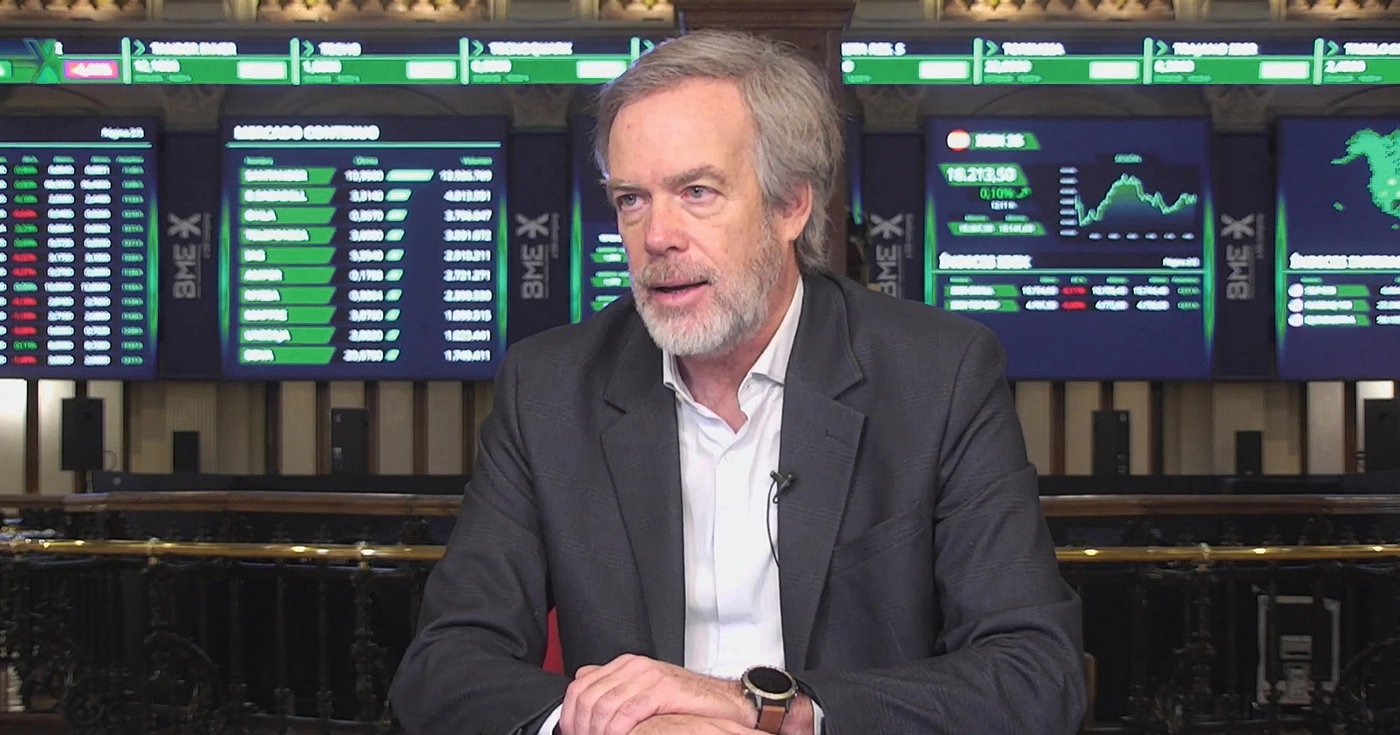
Recently, our Director of Institutional Relations, José María Gómez-Acebo, explained this evolution in an interview with Estrategias de Inversión. Beyond the market analysis, the message is clear: the real estate sector needs more structured capital—and we want to be ready to channel it.
A strong market, but a demanding one
Spain is experiencing a solid period for real estate investment, especially in the living segment. Residential demand remains the market’s main engine and accounts for a significant share of investment.
However, the environment is more complex than it was a few years ago. Regulation in certain sub-segments has shifted large funds’ focus toward alternative typologies—such as student housing, senior living, or flex living—while rising construction costs are putting pressure on development returns.
Today, the challenge is not only financing more housing, but doing so with structures that can absorb higher costs, manage timeline risk, and preserve attractive returns. That’s where we believe our experience makes a real difference.
Alternative financing is now structural
Since the 2008 crisis, banks have maintained very defined criteria: they finance developments with land ownership, an approved license, and a high level of pre-sales. Everything that happens before that—land development, pre-license phases, or projects that don’t allow pre-reservations—requires private capital.
Over the years, we’ve proven that alternative financing is not cyclical, but structural. We’ve financed more than 250 transactions, analyzed thousands of projects, and built a specialized team capable of evaluating each investment with rigor.
Our co-investment model has enabled thousands of investors to participate in key phases of real estate development. But the market has evolved: projects are increasingly larger, the required volumes are higher, and platform regulation sets a €5 million cap per promoter over 12 months.
That limit made sense a decade ago. Today, it falls short in a context where prices have risen significantly.
What does a fund manager mean?
That’s why we decided to expand our model by creating a fund management company, already authorized by the CNMV.
This step allows us to structure regulated vehicles and channel larger volumes of capital—especially from institutional profiles such as insurers, funds, or large private wealth—who prefer investing through regulated structures rather than deal by deal.
We expect to launch, likely in the second half of 2026, products such as:
- Closed-ended investment companies (SICC), focused on equity deals
- Hedge funds / alternative investment funds (FIL), primarily focused on debt
This is not about replacing crowdfunding, but complementing it. We’ll continue offering direct co-investment opportunities, while adding an additional layer that enables us to scale, diversify further, and take on larger transactions.
This evolution also expands our scope beyond traditional residential into segments such as commercial real estate (CRE), including hospitality, logistics, and student housing.
More options for investors
From an investor’s perspective, this new stage means more alternatives.
Traditional crowdfunding allows you to choose project by project and build a personalized portfolio. Funds, by contrast, provide automatic diversification from day one and delegate execution to a specialized management team.
Both approaches are complementary. In our experience, a balanced strategy combines debt transactions—with shorter timeframes and attractive returns—and equity projects, with longer horizons and greater upside potential.
What doesn’t change is our discipline in analysis. Every transaction goes through an exhaustive process: an investment committee, external validation of costs and pricing, urban-planning review, and continuous monitoring. We strongly believe that in a demanding environment, selection is the primary tool for protecting capital.
A long-term view
Spain needs more housing and more living solutions. And that development requires well-structured private capital. As long as banks maintain prudent criteria focused on later-stage phases, co-investment will remain essential.
Our evolution toward a fund manager reflects that reality. We want to keep channeling capital into solid projects—through rigorous analysis and risk-adjusted returns—but with greater scale and execution capacity.
We’re building the next phase of Urbanitae, while keeping what brought us here: co-investment, aligned interests, and a long-term vision in one of the economy’s key sectors.
You can read the full interview here